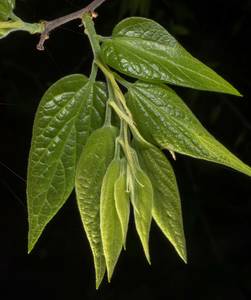
This close-up photograph shows the highly textured bark of a hackberry tree (Celtis sp.). The surface is characterized by prominent, corky, warty ridges that project outward in irregular vertical patterns, a key diagnostic feature of the species. These raised, grayish-brown outgrowths display fine, layered striations that resemble topographic contour lines or sedimentary strata. Lick Creek Park. College Station, Texas, February 18, 2026  Sugar-frosted leaves of the bog blueberry or bog bilberry (Vaccinium uliginosum), locally known in Russia as golubika. The ice crystals have nucleated along the leaf margins, outlining each small oval leaf in white. This creates a striking contrast with the deep crimson tissue. The deep red pigmentation is due to anthocyanins.This is a classic sign of the "pre-winter" season (predzimye) in the taiga ecosystem. Kannelyarvi, north from Saint Petersburg, Russia, October 1, 2025  Perforated "Swiss cheese" brown leaf of a sycamore (Platanus occidentalis) among dry willow oak leaves on a sandy path in Lick Creek Park. The leaf is a Sycamore skeleton. The holes were started by Anthracnose (fungus) and Lace Bugs (insects) attacking the living leaf, and then finished off by winter decomposition that ate away the dead tissue but left the tough veins behind. College Station, Texas, January 7, 2026 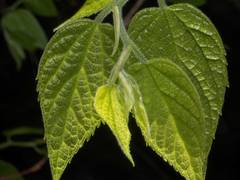 Young leaves of hackberry in Wolf Pen Creek Park. College Station, Texas, March 18, 2026 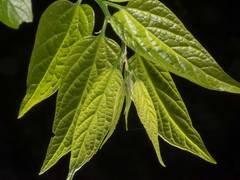 Thin young leaves of hackberry in Wolf Pen Creek Park. College Station, Texas, March 18, 2026 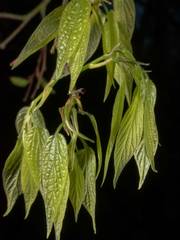 Emerging young leaves of hackberry in Wolf Pen Creek Park. College Station, Texas, March 18, 2026  Ornamental cabbage (flowering Kale) with deeply ruffled and fringed edges of the leaves in Leach Teaching Gardens at Texas A and M University. College Station, Texas, January 18, 2026  Young leaves of hackberry tree in Bee Creek Park. College Station, March 7, 2024  Several rust-colored, spiky-bodied ants can be seen navigating the deeply furrowed bark of an oak tree, acting as a miniature logging crew. Some of the ants are carrying entire green, beaded oak catkins--the tree s string-like flower clusters--while one prominently hoists a freshly cut, bright green section of an oak leaf in its jaws. The ants carry these heavy loads hoisted high over their heads, a posture that resembles someone carrying a sunshade. These are Texas leafcutter ants (Atta texana), a highly destructive but fascinating native species also known as the "town ant" or "parasol ant" due to their unique carrying technique. They climb high into the canopies of oaks and other trees to use their powerful, scissor-like mandibles to slice away fresh foliage, preferring new, tender, high-water-content growth like young leaves and spring catkins. Working in massive, organized trails, a large colony can entirely strip the leaves from a small- to medium-sized tree in a single night, and they frequently travel hundreds of feet from their underground nests to find a suitable harvest. Lake Somerville Trailway near Nails Creek Unit of Somerville Lake State Park. Texas, March 14, 2026  Young leaves on hackberry tree in Bee Creek Park. College Station, Texas, March 21, 2024  Young leaves of flame leaf sumac in Lick Creek Park. College Station, Texas, March 10, 2023  Young leaves of hackberry tree in Lick Creek Park. College Station, Texas, March 12, 2024  Deeply divided umbrella-like young leaf of May apple near Boulder Field in John Witherspoon Woods park. Princeton, New Jersey, April 26, 2007  A miniature procession of rust-colored ants traverses the deeply grooved, dry bark of an oak tree. In the center foreground, one ant acts as the focal point, hoisting a freshly cut, bright green slice of an oak leaf high above its head. Because the leaf fragment curves directly over the ant s body like a small green canopy, it perfectly illustrates why this species is often nicknamed the "parasol ant". Surrounding this central figure, three other ants march in the same direction, each carrying large, beaded green oak catkins gripped tightly in their mandibles. These are Texas leafcutter ants (Atta texana), a native species famous for its highly organized and destructive foraging behavior. Working in massive, coordinated trails that can span hundreds of feet, worker ants climb into the canopies of oaks and other trees to systematically slice away fresh, tender vegetation. The workers possess powerful jaws capable of cutting through leaves and flowers with remarkable speed, allowing a large colony to completely strip the foliage from a small tree in a single night. Lake Somerville Trailway near Nails Creek Unit of Somerville Lake State Park. Texas, March 14, 2026  Venation of some young leaves in Lick Creek Park. College Station, Texas, March 27, 2023 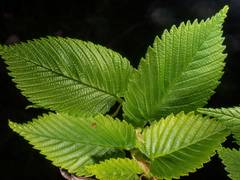 Young leaves of elm tree in Bee Creek Park. College Station, Texas, March 26, 2026  Clay-colored leaf beetle (Anomoea laticlavia) on leaves of an oak tree in Lick Creek Park. College Station, Texas, March 27, 2009  a young, actively growing shoot of eastern poison ivy (Toxicodendron radicans) emerging from the shadows of a thicket. The image is dramatically lit, isolating the central stem and fresh leaves against a nearly pitch-black background, which brings the complex textures and colors of the plant into sharp relief. The lighting emphasizes the plant s characteristic "leaves of three" structure, making the distinct anatomy of the new spring growth unmistakably clear. Wolf Pen Creek Park. College Station, Texas, March 23, 2026  Brown rotting leaves of mustang grape and black leaf of hackberry on the ground after recent rains in Lick Creek Park. College Station, Texas, August 19, 2022 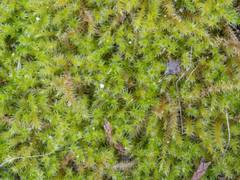 Campyliadelphus chrysophyllus (Campylium chrysophyllum, or "Golden Feather-Moss"). The giveaway is the way the tiny leaves are sitting on the stem. They are strongly squarrose, meaning they bend outward and backward from the stem at sharp angles. This gives the branch tips a distinctively bristly or "starry" appearance when you look right down them, which is the defining field mark of the Campylium/Campyliadelphus genus. Fort Boggy State Park. Leon County, Texas, February 21, 2026  Young leaves of hackberry in Bee Creek Park. College Station, Texas, March 13, 2023  Young leaves of hackberry (Celtis laevigata) in Wolf Pen Creek Park. College Station, Texas, March 30, 2023  Young leaves of hackberry (sugarberry, Celtis laevigata) in Lick Creek Park. College Station, Texas, March 7, 2023  Spider on young leaves of hackberry (Celtis laevigatus) in Lick Creek Park. College Station, Texas, March 23, 2023  Leaf venation of rattan vine (supplejack, Berchemia scandens) in Lick Creek Park. College Station, Texas, March 2, 2023  Back lit leaves on hackberry tree in Bee Creek Park. College Station, Texas, March 21, 2024 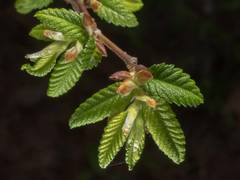 Young leaves of elm in Lick Creek Park. College Station, Texas, March 7, 2026  Leaves of rough-leaf dogwood (Cornus drummondii) in Lick Creek Park. College Station, Texas, March 7, 2023 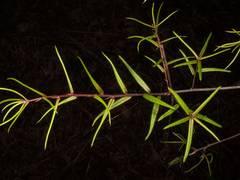 Young leaves of willow oak in Lick Creek Park. College Station, Texas, March 15, 2026 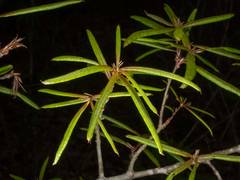 Young leaves of willow oak in Lick Creek Park. College Station, Texas, March 25, 2026 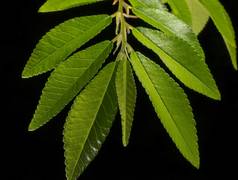 Young leaves of a small elm in Wolf Pen Creek Park. College Station, Texas, March 18, 2026  Leaf venation of rusty blackhaw viburnum (Viburnum rufidulum) in Lick Creek Park. College Station, Texas, March 2, 2023 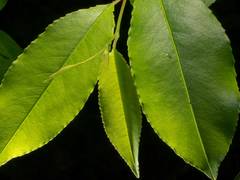 Young leaves of black cherry in Lick Creek Park. College Station, Texas, March 25, 2026 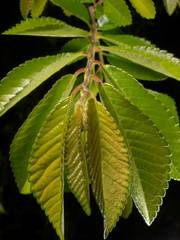 Back lit young leaves of a small elm in Wolf Pen Creek Park. College Station, Texas, March 18, 2026 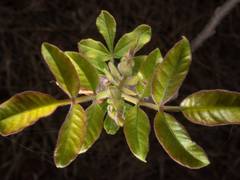 Young leaves of flameleaf sumac in Lick Creek Park. College Station, Texas, March 7, 2026  Spiky ice crystal on edges of a leaf in Lick Creek Park. College Station, Texas, February 5, 2022  Some rusty spots on underside surface of leaves of Yaupom holly in Lick Creek Park. College Station, Texas, March 15, 2026  Young leaves and flowers of hackberry (Sugarberry, Celtis laevigata) in Lemontree Park. College Station, Texas, March 24, 2010.  Young leaves of hackberry in Bee Creek Park. College Station, Texas, April 2, 2021  Venation of a dry sycamore leaf in Lick Creek Park. College Station, Texas, December 11, 2020  Venation of sycamore leaf in Lick Creek Park. College Station, Texas, August 2, 2019  Focusing closer, the photograph reveals the intricate, densely packed structure of the cursed buttercup (Ranunculus sceleratus) as it colonizes the dried mud. The plants exhibit a vibrant, fleshy appearance, characterized by deeply lobed, shiny green leaves that vaguely resemble flat-leaf parsley or young celery--giving the plant its alternate name, the celery-leaved buttercup. In this dense thicket, the stout, hollow stems branch frequently, creating a tangled, multi-layered canopy. Tiny, five-petaled pale yellow flowers dot the upper stems, standing out brightly against the dark backdrop of the soil and the deeper green foliage below. Flag Pond near Nails Creek Unit of Somerville Lake State Park. Texas, March 14, 2026  Venation of a dried leaf of sycamore in Lick Creek Park. College Station, Texas, August 2, 2022  Young leaves on a tree in Bee Creek Park. College Station, Texas, March 21, 2024  Unfolding young leaves on elm tree in Bee Creek Park. College Station, March 7, 2024  Young reddish leaves of elm tree in Bee Creek Park. College Station, March 7, 2024  Young leaves on elm tree in Lick Creek Park. College Station, Texas, March 12, 2024  Young leaves of sycamore tree in Lick Creek Park. College Station, Texas, March 28, 2024  Young tender leaves on a tree in Lick Creek Park. College Station, Texas, March 18, 2010.  Catkins and red young leaves of an oak tree in Lick Creek Park. College Station, Texas, March 27, 2009  Young leaves of a small tree of persimmon(?) in Bee Creek Park. College Station, Texas, March 24, 2023  Tight, low-growing rosette with heavily crinkled (fringed) leaf margins of ornamental cabbage (flowering Kale) in Leach Teaching Gardens at Texas A and M University. College Station, Texas, January 18, 2026  Young leaves of poison ivy climbing on a tree in Lick Creek Park. College Station, Texas, March 12, 2024  Young leaves of rusty blackhaw viburnum (Viburnum rufidulum) in Lick Creek Park. College Station, Texas, March 15, 2026  Catkins and young leaves of oak tree on Post Oak Trail in Lick Creek Park. College Station, Texas, March 27, 2009  Venation of a dry leaf of mulberry when exposed to regular daylight as well as when illuminated by a 365 nm ultraviolet (UV-A) blacklight from Lick Creek Park. College Station, Texas, October 13, 2024  Back lit young leaves of rusty blackhaw viburnum (Viburnum rufidulum) in Wolf Pen Creek Park. College Station, Texas, March 18, 2026  Galls on a leaf of mustang grape in Bee Creek Park. College Station, Texas, March 26, 2026  Young leaf of trumpet vine in Bee Creek Park. College Station, Texas, March 24, 2023  Shoot of hackberry tree in Bee Creek Park. College Station, Texas, March 26, 2026  Young leaf of mustang grape in Lick Creek Park. College Station, Texas, March 30, 2022  Young leaves of poison ivy on hackberry tree in Washington-on-the-Brazos State Historic Site. Washington, Texas, March 14, 2021  Young tender leaves of rough-leaf dogwood (Cornus drummondii) in Washington-on-the-Brazos State Historic Site. Washington, Texas, March 19, 2010.  Rosette of deeply ruffled and fringed leaves of ornamental cabbage (flowering Kale) in Leach Teaching Gardens at Texas A and M University. College Station, Texas, January 18, 2026  Grasshopper on a young leaf of trumpet vine in Lick Creek Park. College Station, Texas, March 31, 2023  Young leaf of paper mulberry (Broussonetia papyrifera) in Bee Creek Park. College Station, Texas, March 24, 2023  Leaf venation of sacred fig (Bo-Tree, Ficus religiosa) in a park at Al Intisar Street near a corner with Onaiza. Doha, Qatar, May 3, 2015 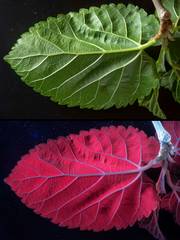 Leaf of mulberry under both white light and a 365 nm ultraviolet (UV-A) LED flashlight in Wolf Pen Creek Park. College Station, Texas, March 2, 2026  In this highly desolate section of the dried Flag Pond, the landscape has been reduced to a severe, almost desert-like expanse of deeply fractured earth. The pale, sun-baked mud is completely broken into a continuous, interlocking mosaic of large desiccation polygons, with wide, dark fissures separating the hardened crust. Dead, curled stalks from last year s aquatic plants are sparsely littered across the barren surface, and in the direct center of the frame, a single, vibrant green cursed buttercup (Ranunculus sceleratus) stands entirely alone. Near Nails Creek Unit of Somerville Lake State Park. Texas, March 14, 2026  Young leaves of Oak Leaf Hydrangea Ellen Huff in Antique Rose Emporium. Independence, Texas, April 13, 2023  Venation of dried leaves of sycamore in Lick Creek Park. College Station, Texas, August 7, 2022 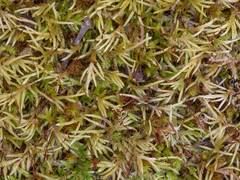 Entodon seductrix (often called Seductive Entodon Moss or Cord Glaze Moss). The leaves are tightly pressed against the stems (imbricate) rather than sticking out. This makes the branches look like smooth, pale green to yellowish cords or tiny rat tails, which is the defining field mark of the Entodon genus. Scattered throughout the mat are the reproductive structures (sporophytes). They consist of thin, wiry, dark brick-red or mahogany stalks (setae) topped with small cylindrical capsules. The presence of these mature red sporophytes is very common for Entodon seductrix in the winter and early spring. Fort Boggy State Park. Leon County, Texas, February 21, 2026  Black blotches on leaves of persimmon caused by Cercospora leaf spot fungus Pseudocercospora diospyricola under a microscope, collected in Bee Creek Park. College Station, Texas, August 31, 2023  Young leaf and a cluster of maple flowers (Acer platanoides) in a park of Politekhnichesky Institute. Saint Petersburg, Russia, May 20, 2011  Back lit leaves of hackberry (sugarberry, Celtis laevigata) in Lick Creek Park. College Station, Texas, March 7, 2023  Young leaves of sycamore tree in Lick Creek Park. College Station, Texas, May 4, 2011  Black blotches on leaves of persimmon (Diospyros virginiana) caused by Cercospora leaf spot fungus Pseudocercospora diospyricola in Lick Creek Park. College Station, Texas, August 12, 2021  Young leaves of sycamore tree in Lick Creek Park. College Station, Texas, April 6, 2022 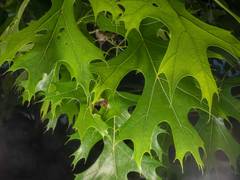 Oak leaves in Bee Creek Park. College Station, Texas, March 20, 2026 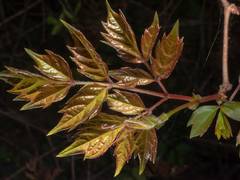 Young leaf of peppervine (Ampelopsis arborea) on Lake Somerville Trailway near Nails Creek Unit of Somerville Lake State Park. Texas, March 29, 2026  Leaf texture of an icy leaf of curly dock near the creek in Bee Creek Park. College Station, Texas, January 4, 2022  Close-up of the "Adam s Head" (or "The Old Man") revealing the intricate craftsmanship carved directly into the granite boulder, highlighting its weathered texture and mysterious expression. The close view emphasizes the deeply carved eyes with distinct eyelids and pupils, gazing upward in a look of eternal surprise or contemplation. The nose is prominent and well-defined. The sculpture s rough granite surface is speckled with wet, yellow maple leaves, which contrast with the dark grey stone and emphasize its seamless, "sunken" placement within the forest floor. Sergievka Park, Old Peterhof, west from Saint Petersburg, Russia, October 13, 2025  Young leaves and catkins on an oak tree after a rain in Lick Creek Park. College Station, Texas, April 2, 2009  Venation of a sassafras leaf on Richards Loop Trail in Sam Houston National Forest. Texas, March 18, 2020  Young leaves of elm in Bee Creek Park. College Station, Texas, March 24, 2023  Young red leaves of an oak tree after a rain on Post Oak Trail in Lick Creek Park. College Station, Texas, April 2, 2009  Young leaves of some bush in Bee Creek Park. College Station, March 7, 2024 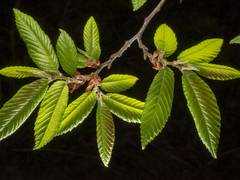 Fresh leaves of elm in Lick Creek Park. College Station, Texas, March 15, 2026 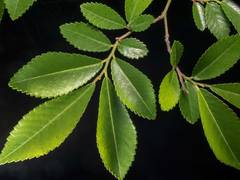 Leaves of a small elm in Wolf Pen Creek Park. College Station, Texas, March 18, 2026  Venation of a leaf of canna in TAMU Holistic Garden in Texas A and M University. College Station, Texas, July 8, 2011  Young leaves of elm in Lick Creek Park. College Station, Texas, March 12, 2024  Young leaves of elm in Lick Creek Park. College Station, Texas, March 15, 2019  Young oak leaves in Lick Creek Park. College Station, Texas, March 12, 2024  Young elm leaves in Lick Creek Park. College Station, Texas, March 30, 2022  Young oak leaves in Lick Creek Park. College Station, Texas, March 30, 2022  Young leaves of elm in Lick Creek Park. College Station, Texas, March 2, 2023  Young leaves of elm in Lick Creek Park. College Station, Texas, March 11, 2019  Young leaves of poison ivy in Bee Creek Park. College Station, Texas, March 21, 2024  Young oak leaves in Lick Creek Park. College Station, Texas, March 18, 2010. |