
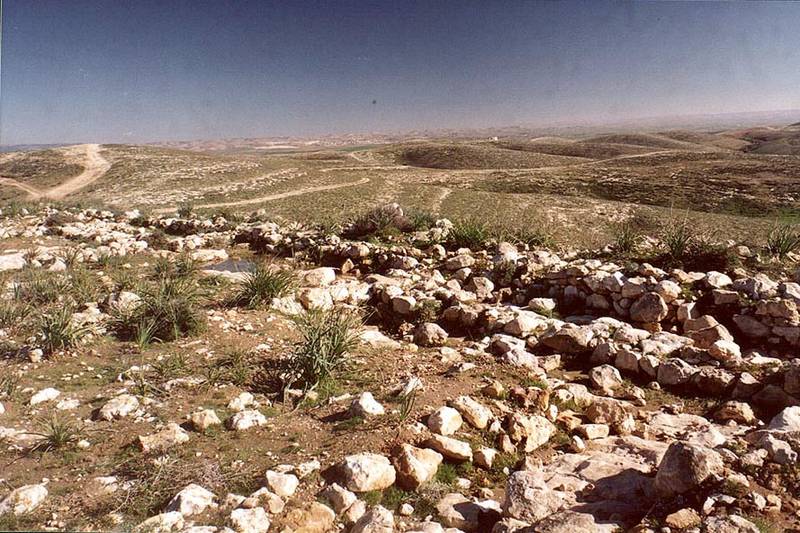

Unexplored ancient city known only by BedouinsThe Negev Bedouin. A Photographic Exhibit. Nourit Padon-Melcer on a hill south from Givot Lahav South Reserve, in Mount Karkor area, 3 miles north from Beer-Sheva. The Middle East


Album 172: Beer-Sheva, to the north, January 26 - 27, 2001
The image depicts an unexplored ancient city, captured on January 27, 2001.
The hilltop setting is characterized by a vast expanse of rocky terrain and sparse vegetation. A winding dirt path traverses the landscape, while scattered rocks and stones punctuate the scene. The horizon stretches out in the distance, with no discernible structures or buildings visible.
In the background, rolling hills are visible, with some areas appearing more densely vegetated than others. The sky above is a clear blue, devoid of clouds.
The image's composition suggests that it was taken from a higher vantage point, possibly by someone standing on top of one of the surrounding hills. This viewpoint allows for a broad sweep of the landscape, showcasing the expansive and barren nature of the terrain.
Overall, the photograph presents an intriguing glimpse into the unknown history of this ancient city, inviting the viewer to ponder its significance in relation to the broader context of the region's archaeological heritage. – AI vision


