 |
| |||||||||||||||

| ||||||||||||||||


| Similar |   |
  |
  |
  |
  |
| |||||||||||||||||||||||||||
| |||||||||||||||||||||||||||
| 1996 1997 1998 1999 2000 2001 2002 2003 2004 2005 2006 2007 2008 2009 2010 2011 2012 2013 2014 2015 2016 2017 2018 2019 2020 2021 2022 2023 2024 2025 2026 | |||||||||||||||||||||||||||
| New version Slide Show Most Popular Full List Statistics Technical Details Home Page | |||||||||||||||||||||||||||
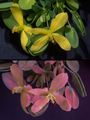
The image presents a striking comparison between two photographs of water primrose (Ludwigia), showcasing its appearance under regular daylight and when illuminated by a 365 nm ultraviolet (UV-A) blacklight. **Daylight Photograph** * The left-hand photograph displays the plant in its natural state, with yellow flowers and green leaves. **Ultraviolet (UV-A) Blacklight Photograph** * The right-hand photograph reveals an unexpected transformation when exposed to UV-A light. **Overall Impression** The image highlights the unique properties of water primrose, demonstrating its ability to fluoresce under UV-A light. This phenomenon is likely due to the presence of fluorescent pigments in the plant's leaves and flowers. The contrast between the two photographs creates a visually striking effect, emphasizing the importance of considering the lighting conditions when observing plants. – AI vision |
La hidroprímula (Ludwigia) cuando se expone a la luz del día normal y cuando se ilumina con una luz negra ultravioleta de 365 nm (UV-A) recogida en la sección Stubblefield del sendero Lone Star en el Bosque Nacional Sam Houston, Texas, el 15 de septiembre de 2024. La imagen presenta una comparación sorprendente entre dos fotografías de hidroprímula (Ludwigia), mostrando su aspecto bajo la luz del día normal y cuando se ilumina con una luz negra ultravioleta de 365 nm (UV-A). **Fotografía diurna** *La fotografía de la izquierda muestra la planta en su estado natural, con flores amarillas y hojas verdes. *El fondo es gris oscuro, lo que proporciona un contraste neutro a los colores vibrantes de la planta. **Fotografía bajo luz ultravioleta (UV-A)** *La fotografía de la derecha revela una transformación inesperada cuando se expone a la luz UV-A. *Las hojas presentan un tono rosado-rojizo, mientras que las venas aparecen azul brillante. *Las flores siguen siendo amarillas, pero con una coloración ligeramente más intensa en comparación con la fotografía diurna. **Impresión general** La imagen resalta las propiedades únicas de la hidroprímula, demostrando su capacidad para fluorescer bajo luz UV-A. Este fenómeno se debe probablemente a la presencia de pigmentos fluorescentes en las hojas y flores de la planta. El contraste entre las dos fotografías crea un efecto visualmente sorprendente, lo que enfatiza la importancia de considerar las condiciones de iluminación al observar las plantas. – Spanish translation |
Keyword variants
Houston National Forest picture show
high resolution online digital collection
Lone Star State
United States
picture gallery
photo album
documentary photographs
daily pics
TX
travelogue
snapshots
sightseeing
photowalks
photoblog
graphic
fotografias
foto
America