 |
| |||||||||||||||

| ||||||||||||||||


| Similar | 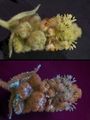  |
  |
  |
  |
  |
| |||||||||||||||||||||||||||
| |||||||||||||||||||||||||||
| 1996 1997 1998 1999 2000 2001 2002 2003 2004 2005 2006 2007 2008 2009 2010 2011 2012 2013 2014 2015 2016 2017 2018 2019 2020 2021 2022 2023 2024 2025 2026 | |||||||||||||||||||||||||||
| New version Slide Show Most Popular Full List Statistics Technical Details Home Page | |||||||||||||||||||||||||||
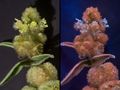
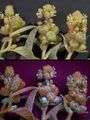
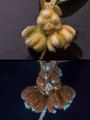
The image presents a comparative analysis of flowers using two distinct lighting sources: natural light and UV-A blacklight at 365 nm wavelength. **Natural Light Image** * The left photograph displays a cluster of flowers with green leaves. **UV-A Blacklight Image** * In contrast to the natural light image, the UV-A blacklight image reveals the presence of ultraviolet-absorbing pigments, known as flavonoids, within the flowers. **Key Observations** * The natural light image provides an accurate representation of the flower's color and texture. **Conclusion** The image effectively demonstrates the use of UV-A blacklight to visualize fluorescent compounds in plant materials. This technique can be applied in various fields, including botany and forensic science, where it is used to detect hidden patterns or marks on surfaces. The image serves as a valuable tool for scientists and researchers seeking to understand the properties and behavior of these pigments in different environments. – AI vision |
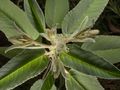
Las flores de croton peludo (hogwort, Croton capitatus) tanto en luz natural como bajo luz negra ultravioleta (UV-A) de 365 nm del Lick Creek Park. College Station, Texas, 17 de septiembre de 2024. La imagen presenta un análisis comparativo de las flores usando dos fuentes de iluminación distintas: luz natural e iluminación negra ultravioleta a una longitud de onda de 365 nm. **Imagen de luz natural** *La fotografía izquierda muestra un racimo de flores con hojas verdes. *Las flores parecen de color amarillo pálido, con peinecitos peludos pequeños que recuerdan a bolitas de algodón o pelotas de goma a lo largo de sus tallos. **Imagen de luz negra UV-A** *En contraste con la imagen de luz natural, la imagen de luz negra UV-A revela la presencia de pigmentos absorbentes de ultravioleta, conocidos como flavonoides, dentro de las flores. *Estos pigmentos hacen que las flores emitan una fluorescencia azul-verde bajo iluminación UV-A. *Hay que señalar que las hojas no presentan este fenómeno. **Observaciones clave** *La imagen de luz natural proporciona una representación precisa del color y la textura de las flores. *La imagen de luz negra UV-A destaca la presencia de pigmentos absorbentes de ultravioleta en las flores, que son invisibles para el ojo humano bajo condiciones de iluminación normal. **Conclusión** La imagen demuestra efectivamente el uso de luz negra UV-A para visualizar compuestos fluorescentes en materiales vegetales. Esta técnica puede aplicarse en diferentes campos, incluidos la botánica y la ciencia forense, donde se usa para detectar patrones u marcas ocultas en superficies. La imagen sirve como una herramienta valiosa para científicos e investigadores que buscan comprender las propiedades y el comportamiento de estos pigmentos en diferentes entornos. – Spanish translation |
Keyword variants
Lick Creek Park photo album
high resolution online digital collection
Berlin on the Brazos
Rock Prairie Rd
Lone Star State
Greens Prairie Road
United States
picture gallery
nature trails
Nature Park
flower head
documentary photographs
daily pics
conservative town
Brazos County
wildlife
TX
travelogue
snapshots
sightseeing
photowalks
photoblog
graphic
fotografias
foto
floret
floral
Bryan
blossom
bloom
America
Aggieland