Home Page > Picture Archives > Year 2024 > Album 3623 > Photo 17          
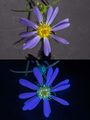
Wild petunia (Ruellia caroliniensis ) when...in Sam Houston National Forest. Texas  
Previous
Previous
Next
Next
Browse current photo album: College Station-Sam Houston Forest, Texas

Wild petunia (Ruellia caroliniensis(?)) when exposed to regular daylight as well as when illuminated by a 365 nm ultraviolet (UV-A) blacklight from Richards Loop Trail in Sam Houston National Forest. Texas, September 21, 2024

#3623-17
a
Thumbnail 3623-17: Wild petunia (Ruellia caroliniensis...National Forest. Texas Show full size picture

Histogram
Shooting data

X-Large Image
Similar   Thumbnail of picture 3623-20: Mountain mint (Pycnanthemum tenuifolium) when exposed to regular ... Houston National Forest. Texas, September 21, 2024 Thumbnail of picture 3623-16: Orange milkweed (Asclepias tuberosa) when exposed to regular daylight ... Houston National Forest. Texas, September 21, 2024 Thumbnail of picture 3623-19: Pencil flower (Stylosanthes biflora) when exposed to regular daylight ... Houston National Forest. Texas, September 21, 2024 Thumbnail of picture 3623-18: Southern prairie aster (Eurybia hemispherica)(?) when exposed to ... Houston National Forest. Texas, September 21, 2024 Thumbnail of picture 3623-14: St. Andrew cross (Hypericum, Ascyrum hypericoides) when exposed to ... Houston National Forest. Texas, September 21, 2024
1996  1997  1998  1999  2000  2001  2002  2003  2004  2005  2006  2007  2008  2009  2010  2011  2012  2013  2014  2015  2016  2017  2018  2019  2020  2021  2022  2023  2024  2025  2026 
New version    Slide Show    Most Popular    Full List    Statistics    Technical Details         Home Page

The image features two photographs of a wild petunia flower, showcasing its appearance under different lighting conditions. The top photograph is taken using regular daylight, while the bottom one utilizes a blacklight with a wavelength of 365 nm ultraviolet (UV-A) light.

**Top Photograph:**

* **Flower Color:** Under normal lighting, the flowers are purple in color.
* **Background:** The background appears to be dark, possibly due to shadows cast by the surrounding foliage or the photographer's position.

**Bottom Photograph:**

* **Flower Appearance:** When illuminated with UV-A light, the flower exhibits a striking blue-purple luminescence. This effect is likely caused by fluorescent pigments present in the petals that absorb UV radiation and emit visible light.
* **Background:** The background remains dark, possibly due to the intense UV-A illumination overpowering any ambient light sources.

**Conclusion:**

The image effectively demonstrates how different lighting conditions can significantly impact our perception of colors. The use of UV-A light reveals a hidden aspect of the flower's appearance, highlighting its unique ability to fluoresce under specific wavelengths of radiation. This phenomenon is not only visually striking but also provides valuable insights into the complex interactions between light and biological materials in nature. – AI vision

La petunia silvestre (Ruellia caroliniensis?) cuando se expone a la luz del día regular, así como cuando se ilumina con una luz negra de longitud de onda de 365 nm UV-A desde Richards Loop Trail en el Bosque Nacional Sam Houston, Texas. 21 de septiembre de 2024. La imagen muestra dos fotografías de una flor de petunia silvestre, mostrando su apariencia bajo diferentes condiciones de iluminación. La fotografía superior se toma con luz del día normal, mientras que la inferior utiliza una luz negra con una longitud de onda de luz ultravioleta (UV-A) de 365 nm.
**Fotografía superior:** * **Color de las flores:** Bajo iluminación normal, las flores son de color púrpura. * **Fondo:** El fondo parece oscuro, posiblemente debido a las sombras producidas por la vegetación circundante o la posición del fotógrafo.
**Fotografía inferior:** * **Apariencia de las flores:** Cuando se ilumina con luz UV-A, la flor exhibe una impresionante luminiscencia azul-púrpura. Este efecto es probablemente causado por pigmentos fluorescentes presentes en los pétalos que absorben radiación UV y emiten luz visible. * **Fondo:** El fondo sigue oscuro, posiblemente debido a la intensa iluminación UV-A que sobrepasa cualquier fuente de luz ambiental.
**Conclusión:** La imagen demuestra efectivamente cómo las diferentes condiciones de iluminación pueden tener un impacto significativo en nuestra percepción de los colores. El uso de la luz UV-A revela un aspecto oculto del aspecto de las flores, destacando su capacidad única para fluorescer bajo longitudes de onda específicas de radiación. Este fenómeno no solo es visualmente impactante sino que también proporciona insights valiosos en las complejas interacciones entre la luz y los materiales biológicos en la naturaleza. – Spanish translation


Keyword variants

high resolution online digital collection
Richards Loop Trail scenery
Houston National Forest photo
Lone Star State
United States
picture gallery
photo album
documentary photographs
daily pics
TX
travelogue
snapshots
sightseeing
photowalks
photoblog
graphic
fotografias
foto
America