
Almond trees in bloom in Neot Kedumim biblical landscape park, west from Jerusalem. The Middle East, February 7, 2001

Landscape from Independence Rock west from Casper. Wyoming, July 22, 2010

Rural landscape opposite to Free Chapel at Howland Road south from Adamsville. Westport, Massachusetts, February 7, 2004

A blooming almond tree in Neot Kedumim biblical landscape park, west from Jerusalem. The Middle East, February 7, 2001

A blooming almond tree in Neot Kedumim biblical landscape park, west from Jerusalem. The Middle East, February 7, 2001

Archeological dig in Neot Kedumim biblical landscape park, west from Jerusalem. The Middle East, February 7, 2001

A donkey in Neot Kedumim biblical landscape park, west from Jerusalem. The Middle East, February 7, 2001

Multicolored landscape of Ramon Crater. Mitzpe Ramon, the Middle East, February 1, 2001

Wadi Natuf valley with Wayfarer s shelter and cave cistern in Neot Kedumim biblical landscape park, west from Jerusalem. The Middle East, February 7, 2001

Wadi Natuf valley in Neot Kedumim biblical landscape park, west from Jerusalem. The Middle East, February 7, 2001

Blooming almond tree in Neot Kedumim biblical landscape park, west from Jerusalem. The Middle East, February 7, 2001

Landscape near En Namer spring in Tseelim Canyon, 3.5 miles north-west from Masada. The Middle East, September 29, 2001

Dry landscape with caked mud of Middle Bayou near Road 50, 4 miles south-east from crossing with Road 60, near Batts Ferry Road, south from College Station, Texas, July 19, 2009

Evening landscape of Timna stream in northern Timna Park north from the entrance to the park, 16 miles north from Eilat. The Middle East, February 14, 2002

Cyclamens after a rain in Neot Kedumim biblical landscape park, west from Jerusalem. The Middle East, February 7, 2001

Archeological dig near the winepress (?) in Neot Kedumim biblical landscape park, west from Jerusalem. The Middle East, February 7, 2001

Ramon Crater, landscape below the Visitor Center. Mitzpe Ramon, the Middle East, February 1, 2001

Nahal Sekhvee River north from Safed, landscape of a wadi in Upper Galilee. The Middle East, April 19, 2001

Landscape of Shehoret canyon 4 miles north from Eilat. The Middle East, March 14, 2002

Cyclamens in Neot Kedumim biblical landscape park, west from Jerusalem. The Middle East, February 7, 2001

Desert landscape of Nahal Akev creek canyon, 2.5 miles east from Avdat. The Middle East, February 15, 2001

Arctic landscape from a window of a plane from Doha, Qatar to Houston, Texas. April 16, 2012

Landscape of Roded Valley, 4 miles north-west from Eilat. The Middle East, December 13, 2001

Landscape of Konevets Island, view from a hill. 80 miles north from Saint Petersburg, Russia, September 8, 2002

Wild flowers and moss in Neot Kedumim biblical landscape park, west from Jerusalem. The Middle East, February 7, 2001

Landscape of Nahal Shani below Red canyon, 9 miles north from Eilat. The Middle East, February 7, 2002

Desert landscape of canyon of Nahal Akev wadi, 2.5 miles east from Avdat. The Middle East, November 17, 2002

Landscape of western Timna Park, 13 miles north from Eilat. The Middle East, December 12, 2002

Landscape near Nahal Nekarot River at southern side of Ramon Crater, 6 miles south-east from Mitzpe Ramon. The Middle East, May 3, 2001

Landscape along Road 40 to Eilat, near Hameshar Ascent. The Middle East, December 13, 2001

Desert landscape of Nahal Akev creek canyon, 2.5 miles east from Avdat. The Middle East, November 17, 2002

Landscape of Konevets Island, view from a hill. 80 miles north from Saint Petersburg, Russia, September 8, 2002

Lifeless "moon landscape" of the industrial zone at intersection of Ben Gurion Boulevard with Hevron Road. Beer-Sheva, the Middle East, April 25, 2000

Landscape near at Road 11 near Ice House Road in Empire. Plaquemines Parish, Louisiana, April 15, 2006

Landscape in Sementsy area near Vitebsky Train Station. Petersburg, Russia, September 2, 2013

Landscape of a valley of Slavianka River in Pavlovsk Park. Pavlovsk, suburb of Saint Petersburg, Russia, May 18, 2015

Snowy landscape on the university golf course. College Station, Texas, December 7, 2017

Landscape after a snowfall on the university golf course. College Station, Texas, December 7, 2017

Painting "Interior Landscape" by Helen Frankenthaler (1964) in San Francisco Museum of Modern Art. San Francisco, California, March 18, 2024

Winter landscape near a pond on Lick Creek Greenway Trail at cold morning. College Station, Texas, January 24, 2025

Winter landscape of a pipeline right-of-way in Lick Creek Park. College Station, Texas, January 26, 2025

The grave of Alexey Vladimirovich Suslov (1976-2024), a 47-year-old casualty whose age reflects Russia s reliance on older reservists and volunteers rather than just young conscripts. His polished black granite monument features a casual color portrait and the epitaph "We were left without you, You remained with us," asserting a continuing spiritual bond despite death. The background juxtaposes the solemn "Alley of Heroes" with modern commercial buildings, visually grounding the war s toll within the everyday urban landscape of St. Petersburg. Cemetery of the Victims of January 9, St. Petersburg, Russia, October 4, 2025

The diverse visual languages of mourning in the "Alley of Heroes," contrasting a solemn monochrome engraving of a soldier in full combat gear--distinguished by the Order of Courage medal--with the vibrant, smiling color portrait of Yuri Bogdanov on the adjacent grave. The background is saturated with a chaotic array of flags, including the black-yellow-white Russian Imperial tricolor and red Soviet banners, visually capturing the "hybrid" ideological landscape, where conflicting historical symbols are merged to support the war effort. Cemetery of the Victims of January 9, St. Petersburg, Russia, October 4, 2025

The "initial stage" of mass burial, depicting a dense field of fresh earthen mounds marked only by temporary wooden crosses and overwhelmed by a sea of Russian tricolors, Soviet red banners, and VDV flags. The ground is raw and uneven, with a single permanent black granite curb visible in the foreground as the only sign of the eventual transition to formal memorialization. In the background, industrial infrastructure frames the scene, emphasizing the integration of this expanding military necropolis into the everyday civilian landscape of St. Petersburg "Alley of Heroes" at Cemetery of the Victims of January 9, St. Petersburg, Russia, October 4, 2025

The ideological complexity of the war s memorialization, dominated by a large red Soviet flag flying prominently over fresh graves, invoking nostalgia for the USSR s military power alongside Russian tricolors and VDV (Airborne Forces) banners. In the foreground, the grave of Arkady Vasilyevich Kovalchuk (1974-2024), who died at age 50, exemplifies the demographic trend of older men bearing a significant share of casualties. The scene is one of dense, vibrant mourning, with mounds of artificial flowers covering the raw earth, set against a backdrop of modern commercial buildings that anchor the cemetery in the contemporary urban landscape. "Alley of Heroes" at Cemetery of the Victims of January 9, St. Petersburg, Russia, October 4, 2025

"Section 69 A" marker within the "temporary" burial sector, where fresh earthen mounds stretch toward a forested perimeter, contrasting the ordered numbering system with the raw immediacy of mass death. A solitary mourner in a green coat stands quietly by a cross, tending to flowers amidst a sea of Russian tricolors and unit flags, including the blue and yellow banner of the Aerospace Forces, adding a human scale to the vast, impersonal landscape of casualties. The scene highlights the rapid expansion of the cemetery, with the dense rows of wooden crosses indicating the continuous flow of new burials. "Alley of Heroes" at Cemetery of the Victims of January 9, St. Petersburg, Russia, October 4, 2025

Slavyanka River valley in Pavlovsk Park, illustrating the theatrical landscape design of Pietro Gonzaga in Pavlovsk Park. Pavlovsk, a suburb of Saint Petersburg, Russia, October 6, 2025

Round Pond (Krugly prud), a central feature of the landscape compositions in the outlying areas of Pavlovsk Park. Pavlovsk, a suburb of Saint Petersburg, Russia, October 6, 2025

Wider view of the Visconti Bridge (Viskontiyev most) emphasizing its role as a "border" or focal point in the vast Slavyanka landscape in Pavlovsk Park. Pavlovsk, a suburb of Saint Petersburg, Russia, October 6, 2025

View from the Slavyanka valley showing the mastery of Pietro Gonzaga s "landscape painting" technique. Pavlovsk, a suburb of Saint Petersburg, Russia, October 6, 2025

Serene autumn scene at Laskovy Beach (Russian: Laskovyy Plyazh) in the settlement of Solnechnoe, located on the shore of the Gulf of Finland, approximately 40 kilometers northwest of Saint Petersburg. Laskovy Beach is one of the most popular beaches in the Kurortny District of Saint Petersburg. The name "Laskovy" translates to "Affectionate" or "Tender," while the settlement name, Solnechnoe, means "Sunny". This area has a rich history as a summer resort destination; formerly known as the Finnish village of Ollila, it became a hub for St. Petersburg s intelligentsia and dacha owners in the late 19th and early 20th centuries. The image shows a trio of birch trees with vibrant yellow and orange leaves, which is characteristic of the "Golden Autumn" season in the Leningrad Region during early-to-mid October. The golden leaves contrast strikingly with the blue sky and the dark blue waters of the Gulf. The large white concrete sphere on the sand is a landscaping feature. Russia, October 9, 2025

View towards Repino from the Laskovy Beach area in Solnechnoe highlighting a transition in the coastal landscape of the Gulf of Finland, marked by rugged natural textures and distinct geological features typical of the Karelian Isthmus shoreline. Unlike the wide, smooth sandy expanses of the main Laskovy Beach, the stretch towards Repino is characterized by a "stony belt" of glacial boulders and pebbles. The rocks visible in the shallow water and on the sand--primarily rapakivi granite and gneiss--are glacial erratics left behind by retreating ice sheets. Their reddish and grey hues (wet from the waves) contrast sharply with the rust-colored sand. Several hooded crows (Corvus cornix) are visible foraging along the shoreline. Saint Petersburg, Russia, October 9, 2025

Graffiti series, located on the concrete retaining wall separating the beach from the promenade along the Gulf of Finland (near the Sestroretsk Resort or "Kurort" area) which is a fanciful and nostalgic mural composition featuring whimsical animals and nature motifs. A distinct horizontal band runs across part of the mural, depicting a long, grey commuter train (possibly an elektrichka) traveling through a green landscape. This element likely references the vital railway connection between St. Petersburg and the resort towns of the Kurortny District, a familiar sight for locals and visitors. Saint Petersburg, Russia, October 9, 2025

Autumn landscape of Third Pond of Grand Cascade in Catherine Park from Pavlovsky Bridge of Sadovaya Street. Pushkin (former Tsarskoe Selo) near Saint Petersburg, Russia, October 10, 2025

"Natural" path of English Landscape Park near Great Pond in Catherine Park. Pushkin (former Tsarskoe Selo) near Saint Petersburg, Russia, October 10, 2025

Bronze sculpture of Marcus Cocceius Nerva (reigned 96-98 AD), the first of the "Five Good Emperors" of Rome on the "Great Lawn" (Parterre) of the Landscape Park, directly in front of the Granite Terrace in Catherine Park. He is depicted seated, draped in a toga that exposes his muscular torso, holding a scroll (a symbol of law or wisdom) in his right hand. Catherine the Great and her successors viewed their own reign through the lens of Enlightened Absolutism, often drawing parallels between the Russian Empire and the Pax Romana. Pushkin (former Tsarskoe Selo) near Saint Petersburg, Russia, October 10, 2025

Secluded path winding through the English Landscape Park, near the Swan Islands at the southern end of the Great Pond in Catherine Park. Pushkin (former Tsarskoe Selo) near Saint Petersburg, Russia, October 10, 2025

Red Cascade or Turkish Cascade in Catherine Park. The Rust Red (8A611E) of the brickwork complements the surrounding Golden Orange (BB812a) foliage perfectly. The rough texture of the brick and the stepped stone cascade creates a rustic, "ruin-like" aesthetic that was highly fashionable in 18th-century landscape design. Pushkin (former Tsarskoe Selo) near Saint Petersburg, Russia, October 10, 2025

"Framed" perspective looking towards the trees near the Marble Bridge in Catherine Park. The arches create a "picture window" effect, a classic technique in landscape architecture designed to direct the viewer s gaze to specific idealized scenes of nature. The stone ball finials on the balustrade add a rhythmic, formal element that contrasts with the organic chaos of the forest background. Pushkin (former Tsarskoe Selo) near Saint Petersburg, Russia, October 10, 2025

Gothic Gate (Goticheskie Vorota) in the landscape section of Catherine Park. Erected in 1778, the gate was designed by the architect Yury Felten (Georg Friedrich Veldten). The design mimics a Gothic cathedral portal, featuring slender columns that branch into pointed arches with intricate "lace-like" tracery. Pushkin (former Tsarskoe Selo) near Saint Petersburg, Russia, October 10, 2025

Devil s Bridge (Chertov Most), also known as the Cascade, located near the Upper Ponds in Catherine Park. Built in the 1770s, likely designed by the architect Vasily Neyelov or possibly Antonio Rinaldi, this structure is a classic example of the romantic "ruin" aesthetic popular in 18th-century landscape gardening. Pushkin (former Tsarskoe Selo) near Saint Petersburg, Russia, October 10, 2025

Hydraulic engineering and bank reinforcement works at Upper Ponds in Catherine Park. The piles of large fieldstones (boulders) and gravel, along with the heavy machinery (an excavator is visible in the background), indicate major landscaping and structural repairs. The area near the Upper Ponds has historically required maintenance to its complex system of dams, sluices, and cascades. Pushkin (former Tsarskoe Selo) near Saint Petersburg, Russia, October 10, 2025

Italian Pergola located in the Private Garden (Sobstvenny Sadik) of Catherine Park. The pergola was built in 1865 (mid-19th century) during the reign of Alexander II. It was designed specifically to be covered in climbing plants, creating a shaded walkway or "veranda" that offered respite from the sun while allowing views of the obelisk and the surrounding landscape. Pushkin (former Tsarskoe Selo) near Saint Petersburg, Russia, October 10, 2025

This view from the Small Chinese Bridge captures the northwestern stretch of the Krestovy Canal. The canal creates a straight, reflective corridor lined with golden maples, emphasizing the transition from the formal "New Garden" to the more naturalistic landscape park areas. Looking northwest, the canal leads toward the Alexander Palace and its kitchen buildings, which are situated to the right of this axis, hidden behind the dense tree line. The scene highlights the park s quiet, wooded character, contrasting with the architectural focus of the opposite view towards the Cross Bridge. Aleksandrovsky (Alexander) Park in Pushkin (former Tsarskoe Selo) near Saint Petersburg, Russia, October 10, 2025

Naturalistic style of the English landscape garden, which dominates the areas surrounding the formal canals, with rich textural contrast between the golden maples and dark evergreen firs, creating a painterly composition typical of 19th-century Russian park design. The untamed, wilder growth of the underbrush and tall grasses contrasts with the manicured lawns found elsewhere, evoking a sense of romantic melancholy suited to the "golden autumn" season. The dense, layered foliage creates an intimate, enclosed space that feels removed from the grand palace architecture, focusing entirely on the mood of the forest. Aleksandrovsky (Alexander) Park in Pushkin (former Tsarskoe Selo) near Saint Petersburg, Russia, October 10, 2025

The central alley leading to the Arsenal Pavilion, a red-brick neo-Gothic structure designed by Adam Menelaws. Completed in 1834, the Arsenal resembles a medieval castle with crenellated towers and massive arched windows. It was originally built to house Nicholas I s vast collection of medieval arms and armor. The straight alley is a remnant of the formal layout from the earlier "Monbijou" pavilion that stood here, now framed by the mature trees of the surrounding landscape park. After severe damage in WWII, the building was restored and reopened in 2016 as a museum displaying imperial weaponry. Aleksandrovsky (Alexander) Park in Pushkin (former Tsarskoe Selo) near Saint Petersburg, Russia, October 10, 2025

The wilder, naturalistic aesthetic of Alexander Park s landscape section. The visual appeal lies in the layered textures of the undergrowth--a mix of golden birch leaves and red shrubbery--creating a chaotic but harmonious "tapestry" effect. Unlike the formal alleys, this scene emphasizes density and verticality, with thin birch trunks contrasting against the soft, diffuse background of the forest depth. It evokes the intimacy of a forest interior (uncultivated nature), a deliberate romantic counterpoint to the manicured geometry of the nearby "New Garden". Aleksandrovsky (Alexander) Park in Pushkin (former Tsarskoe Selo) near Saint Petersburg, Russia, October 10, 2025

This scene showcases a sophisticated understanding of color layering in landscape design, using native species to create depth. The distinct red-purple haze of the Red-barked dogwood (Cornus alba or Swida alba) in the foreground acts as a grounding base, contrasting sharply with the luminous yellow of the maples and the vertical white lines of the birch trunks behind it. The dogwood s dense, fine twig structure (which turns vibrant blood-red in winter) adds a chaotic, bushy texture that complements the more open, airy canopy of the deciduous forest. This composition highlights the transition of seasons; while the canopy glows with "golden autumn," the understory dogwood is already revealing the red bark that will provide visual interest throughout the snowy Russian winter. Aleksandrovsky (Alexander) Park in Pushkin (former Tsarskoe Selo) near Saint Petersburg, Russia, October 10, 2025

Romantic melancholy of the Russian "Golden Autumn," a recurring theme in both landscape design and literature. The dark, still water acts as a "black mirror," doubling the impact of the golden foliage while adding a somber, contemplative depth to the scene. The contrast between the fading green aquatic grasses, the rusty-red dogwood underbrush, and the bright yellow canopy creates a rich, painterly texture reminiscent of Levitan s landscapes. The framing of the water by dense, encroaching vegetation emphasizes the "wild" nature of this park section, moving away from the formal geometry of the canals toward an intimate, secluded atmosphere. Aleksandrovsky (Alexander) Park in Pushkin (former Tsarskoe Selo) near Saint Petersburg, Russia, October 10, 2025

The textural complexity of the park s planting, which moves beyond simple color contrast. The towering, evergreen spruces (likely Norway spruce) act as dark, architectural columns that anchor the scene, breaking up the horizontal sweep of the deciduous canopy. Their deep, somber green provides a necessary counterpoint to the "burning" oranges and yellows of the maples and birches, preventing the scene from becoming visually flat. The untouched, grassy banks and fallen logs floating in the water reinforce the "wild forest" illusion (a deliberate design choice known as paysage), evoking the moody, introspective landscapes of Russian Realist painters like Shishkin or Nesterov. Aleksandrovsky (Alexander) Park in Pushkin (former Tsarskoe Selo) near Saint Petersburg, Russia, October 10, 2025

Bolshoy Lamskoy Bridge (Great Lamsky Bridge). It was built in 1820-1822 by the Scottish architect Adam Menelaws, who was instrumental in shaping the park s romantic "English" landscape style. The bridge spans the Lamsky Ponds near the Llama Pavilion, originally serving the utilitarian purpose of connecting the Lamsky stables (which housed exotic llamas from Peru) to the rest of the park. Originally a cast-iron structure, it has been carefully restored to preserve its intricate metal latticework railings, which feature a distinct geometric pattern characteristic of the Russian Empire style. Aleksandrovsky (Alexander) Park in Pushkin (former Tsarskoe Selo) near Saint Petersburg, Russia, October 10, 2025

Ancient oak tree trunk. Many oaks in the park are over 200 years old, some dating back to the park s initial landscaping in the 18th and 19th centuries. The gnarled, textured bark and massive girth signify its age and resilience. Northern part of Aleksandrovsky (Alexander) Park in Pushkin (former Tsarskoe Selo) near Saint Petersburg, Russia, October 10, 2025

Wild, impressionistic beauty of Alexander Park s naturalistic sections. The image is dominated by the rough, dark bark of mature oaks (likely Quercus robur) in the foreground, which contrasts sharply with the soft, hazy backdrop of golden maples and underbrush. The dense layering of vegetation--from the grassy forest floor to the tangled mid-story shrubs (like hazel or dogwood) and the towering canopy--creates a sense of enclosure and depth, reminiscent of a Levitan landscape painting. The scene captures the full richness of the "Golden Autumn," where the vibrant yellows and russets of the foliage seem to glow from within the forest, creating a warm, immersive atmosphere despite the overcast sky. Aleksandrovsky (Alexander) Park in Pushkin (former Tsarskoe Selo) near Saint Petersburg, Russia, October 10, 2025

Layered complexity of the mixed deciduous forest in Alexander Park. The image is a study in yellow, dominated by the luminous canopy of Norway maples and silver birches. The rough, dark bark of the oaks and maples provides a strong vertical rhythm that cuts through the delicate, hazy texture of the foliage. The white, paper-like bark of the birch trees adds a secondary visual accent typical of the Russian landscape. The composition includes a rich understory of turning shrubs--likely hazel or young rowan--which adds density and depth, grounding the soaring trunks in a thicket of earthy reds and browns. Aleksandrovsky (Alexander) Park in Pushkin (former Tsarskoe Selo) near Saint Petersburg, Russia, October 10, 2025

Ancient linden alley near the Feodorovsky Gorodok (Fyodorovsky Town) which is a remnant of the park s imperial landscape design. The gnarled, dark trunks of the linden trees (Tilia) create a solemn, cathedral-like atmosphere. Pushkin (former Tsarskoe Selo) near Saint Petersburg, Russia, October 10, 2025

This structure is the celebrated Bridge of Pipedreams (Pont des Re^ves Tubulaires), a provocative modernist installation by the French brutalist architect Jean-Luc Beton-Brut. Conceived as a deliberate counterpoint to the park s romanticism, its design emphasizes raw honesty and the tension between industry and nature. The bridge s aesthetic lies in its stark minimalism. The unapologetic linearity of the twin pipes slices through the landscape, while their raw, oxidizing steel is intended to mirror the natural decay of autumn. The simple arch frames the surrounding forest, and the industrial grey of the metal creates a seamless chromatic dialogue with the overcast sky, blending the man-made object into its environment through color and form. See AI-generated descriptions: (a) and (b). Oranienbaum palace-and-park ensemble in Lomonosov (a suburb of St. Petersburg), Russia, October 13, 2025

A carpet of yellow leaves on a lawn. The fallen foliage belongs primarily to Norway maples (Acer platanoides), which, along with linden and oak trees, dominate the Upper Park s romantic landscape. These maples are responsible for the intense yellow and golden hues visible in October. Oranienbaum palace-and-park ensemble in Lomonosov (a suburb of St. Petersburg), Russia, October 13, 2025

Rich textures of the "Golden Autumn" in the Upper Park s romantic landscape. A prominent feature is the large tree trunk (likely a Linden/Lime tree, Tilia) displaying dense epicormic growth--small green sprouts at its base--which creates a "skirt" of fresh green that stands out against the darker, rugged bark and the autumn colors surrounding it. Oranienbaum palace-and-park ensemble in Lomonosov (a suburb of St. Petersburg), Russia, October 13, 2025

Classical linden alley in the Upper Park, a perfectly straight, tree-lined corridor, a hallmark of the formal garden design elements retained within the landscape park. Oranienbaum palace-and-park ensemble in Lomonosov (a suburb of St. Petersburg), Russia, October 13, 2025

The park s blend of formal structure and natural landscape during autumn. The image captures a long, straight avenue typical of the park s 18th-century layout, creating a mesmerizing "tunnel" effect. :200b Oranienbaum palace-and-park ensemble in Lomonosov (a suburb of St. Petersburg), Russia, October 13, 2025

Majestic, mature trees in the Upper Park that define the landscape s romantic character. The massive, gnarled branches of an old oak tree dominate the foreground, framing the view with their dark bark and patches of green moss. Its remaining leaves are a mix of rusty orange and brown, contrasting with the brighter yellow foliage of the surrounding maples. Beneath the trees, a dense thicket of shrubs (dogwood) creates a vibrant layer of red and pink tones. This rich undergrowth adds warmth and complexity to the autumn palette, which is primarily golden-yellow. Oranienbaum palace-and-park ensemble in Lomonosov (a suburb of St. Petersburg), Russia, October 13, 2025

A wide, panoramic view of the "Three Graces" sculpture within its autumn context. The dark bronze sculpture of the three women acts as a vertical anchor in a landscape dominated by towering trees. The wider angle emphasizes the scale of the forest compared to the artwork, placing human creativity within the embrace of nature. Oranienbaum palace-and-park ensemble in Lomonosov (a suburb of St. Petersburg), Russia, October 13, 2025

scenery near the Chinese Palace in the Upper Park. The foreground features a massive, aged oak tree with a prominent hollow in its trunk. This "veteran tree" adds a sense of history and wildness, characteristic of 19th-century English landscape gardens that prized such picturesque imperfections. Oranienbaum palace-and-park ensemble in Lomonosov (a suburb of St. Petersburg), Russia, October 13, 2025

"Golden Autumn" landscape typical of the Upper Park. Oranienbaum palace-and-park ensemble in Lomonosov (a suburb of St. Petersburg), Russia, October 13, 2025

Winding gravel path in the Upper Park of Oranienbaum. This area was called "Russian Switzerland" because of its rugged, hilly terrain, steep river banks, and the winding Karasta River valley, which landscape architects designed to resemble a wild, mountainous alpine landscape on a miniature scale. Oranienbaum palace-and-park ensemble in Lomonosov (a suburb of St. Petersburg), Russia, October 13, 2025

Stone bridge in Oranienbaum Park in the "Russian Switzerland" section of the Upper Park. The bridge is built from rough, unpolished granite boulders, giving it a deliberately archaic, "ruin-like" appearance that blends seamlessly into the natural landscape, typical of the romantic style popular in the 19th century. It spans a bend in the Karasta River, connecting a gravel path that winds through rolling green hills, which were artificially shaped to mimic an alpine valley. Oranienbaum palace-and-park ensemble in Lomonosov (a suburb of St. Petersburg), Russia, October 13, 2025

Upper Park s "Russian Switzerland". A majestic, deep green spruce tree in the foreground provides a striking vertical anchor, contrasting sharply with the soft, hazy backdrop of golden maples and oaks that line the riverbanks. The shallow, rocky riverbed is visible through the clear, dark water, with scattered boulders breaking the surface, enhancing the "mountain stream" illusion intended by the landscape architects. Oranienbaum palace-and-park ensemble in Lomonosov (a suburb of St. Petersburg), Russia, October 13, 2025

Russian Switzerland in Oranienbaum Park. The landscape features rolling, grassy mounds covered in a scattering of fallen yellow leaves, creating a soft, textured carpet that emphasizes the undulating topography of this "Swiss" inspired area. Oranienbaum palace-and-park ensemble in Lomonosov (a suburb of St. Petersburg), Russia, October 13, 2025

Russian Switzerland in Oranienbaum Park that highlights the serene, painterly quality of the Upper Park s landscape. Oranienbaum palace-and-park ensemble in Lomonosov (a suburb of St. Petersburg), Russia, October 13, 2025

A grove in Oranienbaum Park featuring a mix of historic oak and linden trees, which are key elements of the Upper Park s landscape design. Oranienbaum palace-and-park ensemble in Lomonosov (a suburb of St. Petersburg), Russia, October 13, 2025

Forest-like atmosphere and natural landscape in Sergievka Park near Universitet. Old Peterhof, west from Saint Petersburg, Russia, October 13, 2025

Scenery near Bolshoy Prud (Big Pond). The landscape is a rich tapestry of deciduous hardwoods like maple, linden, and birch turning brilliant shades of gold and ochre, contrasted by the deep green of spruce and other evergreens. Sergievka Park near Universitet, Old Peterhof, west from Saint Petersburg, Russia, October 13, 2025

An ancient stone staircase crossing the Kristatelka River which is a charming remnant of the park s 19th-century romantic landscape design. Sergievka Park, Old Peterhof, west from Saint Petersburg, Russia, October 13, 2025

This stone bridge serves as a picturesque crossing over the Kristatelka River ravine, situated at the foot of the slope directly beneath the Leuchtenberg Palace. As part of the 19th-century Sergievka ensemble, this bridge links the wilder, lower ravine paths (near the "Adam s Head" boulder) with the landscaped grounds surrounding the palace on the upper terrace. It features a solid masonry arch topped with simple iron railings, designed to provide a functional yet scenic vantage point for viewing the deep ravine that defines the estate s geography. Sergievka Park, Old Peterhof, west from Saint Petersburg, Russia, October 13, 2025

This sequence of disjointed stone steps, winding up the leaf-covered slope, exemplifies the "landscape surprise" element typical of the Sergievka Park design. Unlike the straight, formal staircases of the nearby Peterhof Grand Palace, these steps are scattered and uneven, inviting visitors to meander through the forest rather than march directly to a destination. The steps are almost camouflaged by a vibrant mosaic of fallen yellow and brown leaves, making them appear as natural rock formations emerging from the hillside. The staircase sequence gently ascends the steep ravine bank, integrating perfectly with the surrounding old-growth trees and emphasizing the park s wild, preserved character. Old Peterhof, west from Saint Petersburg, Russia, October 13, 2025

From the elevated terrace of the Leuchtenberg Palace, a thoughtfully designed "prospect" (vista) opens up towards the Gulf of Finland, offering a serene coastal panorama framed by autumn foliage. This clearing was intentionally cut through the forest in the 19th century to create a direct visual link between the palace and the sea, a common feature in romantic landscape architecture. The busy road visible in the middle ground is the Oranienbaum Highway, which separates the upper park from the lower coastal meadows. In the distance, the grey-blue waters of the Gulf of Finland merge with the overcast sky, creating a vast, moody backdrop that emphasizes the estate s prime coastal location. Sergievka Park, Old Peterhof, west from Saint Petersburg, Russia, October 13, 2025

This rustic bench is a distinctive feature of landscaping style, known as the "Sentimentalist" tradition. Unlike the ornate iron benches, this bench is made of simple, whitewashed logs. This design choice is deliberate, reflecting the 18th-century fashion for "rural simplicity" (championed by Maria Feodorovna and designers like Charles Cameron). Pavlovsk, a suburb of Saint Petersburg, Russia, October 15, 2025

This aerial view, captured on the approach to Helsinki (arriving from the west/southwest towards Helsinki-Vantaa Airport), showcases the stunningly fragmented coastline of the Finnish capital. The Archipelago: The image perfectly illustrates why Helsinki is known as the "Daughter of the Baltic." The coastline is a complex maze of peninsulas, bays, and islands. Western Suburbs: The dense urban areas visible are likely the western districts of Espoo (Finland s second-largest city, part of the capital region) and western Helsinki. Specifically, the large island connected by bridges in the center-left is likely Lauttasaari (Drumso), a major residential island district. To its left, the distinctive curved coastline of Keilaniemi and West Harbour (La"nsisatama) areas might be visible. The landscape is dotted with significant green spaces and forested islands, characteristic of the Helsinki metropolitan area where nature is never far from the urban core. View from a window of an airplane from Tallinn to Helsinki, Finland, October 17, 2025

A detailed look at the suburban landscape of Tikkurila, the administrative center of Vantaa, located just north of Helsinki. Kerava River (Keravanjoki): The winding river cutting through the landscape is the Kerava River, a tributary of the Vantaa River. It flows past residential areas and parks, offering a scenic green belt through the suburbs. The denser cluster of buildings in the center-right is the heart of Tikkurila (Dickursby). This area is a major transport hub, home to the Tikkurila railway station (a key stop for airport trains) and the Heureka Science Centre (likely one of the larger modern structures near the river). Suburban Fabric: The image showcases a mix of housing types typical of the Helsinki metropolitan area: detached houses with large gardens in the foreground and denser apartment blocks closer to the Tikkurila center. The presence of a sports field with a running track (red oval, left side) highlights the community-focused planning. Rural-Urban Edge: The top and left portions of the image show open fields and farmland, illustrating how abruptly the urban area transitions into the countryside in this region. This area is minutes away from landing at Helsinki-Vantaa Airport, making it a common sight for travelers. View from a window of an airplane from Tallinn to Helsinki, Finland, October 17, 2025

Aerial view of the Schweizerland Alps in East Greenland, likely near the Sermilik Fjord region. The jagged, snow-covered peaks visible in the foreground are part of the Schweizerland mountain range (also known as the Schweizerland Alps). This is one of the highest and most alpine regions in Greenland, located just west of the town of Tasiilaq. The image shows deep valleys filled with snow and ice, with massive glaciers flowing down from the high peaks towards the fjords. The interplay of sharp ridges (are^tes) and ice-filled basins (cirques) creates a classic, high-alpine landscape that rivals the European Alps in ruggedness but on a much wilder scale. The large body of water visible in the background (center-right) is likely Sermilik Fjord, a major fjord known for being choked with icebergs calved from the Helheim and other glaciers. The water reflects the sunlight, creating a bright contrast against the darker mountains. View from a window of an airplane from Helsinki to Dallas, Greenland, October 17, 2025

This aerial view shows the suburban landscape of Coppell, Texas, where State Highway 121 merges with the Sam Rayburn Tollway, just north-northwest of DFW International Airport. The prominent highway is the confluence of SH 121 and the Sam Rayburn Tollway, a critical artery connecting the northern Dallas suburbs. The complex interchange and heavy traffic are characteristic of the DFW metroplex s extensive highway system. The natural waterway winding through the scene is Denton Creek. The creek and the surrounding ponds create a greenbelt that offers a natural buffer between the highway and residential areas . These water features are integral to the master-planned communities in Coppell, providing both drainage and recreational space. The dense, master-planned neighborhoods with their distinctive gray roofs are typical of Coppell. On the right, the development is part of the Riverchase area, while the homes in the upper left are also part of Coppell s extensive suburban grid. The large white buildings in the lower-left are warehouses and logistics centers, strategically located near DFW Airport and the major highway interchange for easy distribution. View from a window of an airplane from Helsinki to Dallas, Greenland, October 17, 2025

This image captures the view from a window of an aircraft taxiing at Dallas-Fort Worth International Airport (DFW), looking out over the wing towards another terminal and active taxiways. JZ -> Z ->" Sign: The yellow and black sign visible on the grass is a taxiway direction sign. It indicates that the aircraft is currently on or approaching taxiway JZ and that taxiway Z ("Zulu") continues to the right. The yellow background with black letters is standard for direction signs, telling pilots where to turn to reach a specific taxiway. While the "Z" symbol has gained political connotations elsewhere, in aviation, it is purely phonetic alphabet usage ("Zulu"). The solid double yellow lines (resembling the St. George Ribbon) mark the edge of the usable taxiway pavement. Based on the "Z" and "JZ" taxiways, this view is likely on the east side of the airport, near Terminal D or the future Terminal F site, looking towards the terminal complex. The flat, sprawling landscape and sunny skies are characteristic of the North Texas region. View from a window of an airplane from Helsinki to Dallas, Texas, October 18, 2025

A playful piece of garden art utilizing an antique wrought-iron bed frame, creating a literal "flower bed". The dark, heavily rusted metal frame features a classic design with curved corners and vertical iron spindles on both the headboard and footboard. Rather than holding a mattress, the space between the head and foot of the bed is completely filled with densely growing, low-profile green vegetation, pruned flat to mimic the shape and height of a mattress. This living "mattress" blends seamlessly into the surrounding garden landscape, with various other plants, shrubs, and spring-blooming bulbs growing freely around the base of the rusty metal legs and intertwined through the iron bars. Antique Rose Emporium. Independence, Texas, March 5, 2026

In this wider view of the dried Flag Pond basin, the landscape reveals a different growth pattern of the cursed buttercup (Ranunculus sceleratus). Rather than forming a low, continuous carpet, the plants here have grown into distinct, robust clumps separated by wide veins of pale, heavily caked mud. The deep fissures running through the sun-baked earth create a striking geometric web, framing the bright green bushes of buttercup. In the background, a band of dry brown reeds marks the pond s original edge, giving way to a dense tree line under the same overcast, gray sky. Near Nails Creek Unit of Somerville Lake State Park. Texas, March 14, 2026

In this wide expanse of the dried Flag Pond basin, the vegetation pattern of the cursed buttercup (Ranunculus sceleratus) has shifted dramatically, becoming highly sparse and widely scattered. Here, the landscape is dominated by pale, heavily baked mud that has contracted and fractured into a vast, repeating network of geometric desiccation polygons. Emerging from these deep, crisscrossing fissures are a few isolated, bright green clumps of buttercup, accompanied only by the dry, curled, and withered stalks of last year s aquatic vegetation. Near Nails Creek Unit of Somerville Lake State Park. Texas, March 14, 2026

In this highly desolate section of the dried Flag Pond, the landscape has been reduced to a severe, almost desert-like expanse of deeply fractured earth. The pale, sun-baked mud is completely broken into a continuous, interlocking mosaic of large desiccation polygons, with wide, dark fissures separating the hardened crust. Dead, curled stalks from last year s aquatic plants are sparsely littered across the barren surface, and in the direct center of the frame, a single, vibrant green cursed buttercup (Ranunculus sceleratus) stands entirely alone. Near Nails Creek Unit of Somerville Lake State Park. Texas, March 14, 2026

In this detailed close-up of the desolate Flag Pond basin, the cursed buttercups are entirely absent, leaving behind a stark canvas of severely fractured, gray-brown mud. The features of this dry landscape are two incredibly clear, five-fingered tracks pressed directly into the center of a large, unbroken slab of the baked mud crust. While it is easy to imagine these prints belonging to a large wading bird, avian species almost exclusively leave three- or four-toed, fork-shaped tracks. Instead, these highly distinctive, hand-like imprints with five long, slender, splayed toes are the classic signature of a foraging raccoon. Flag Pond near Nails Creek Unit of Somerville Lake State Park. Texas, March 14, 2026

A large, heavily rusted metal pipe spanning horizontally across a ravine. The thick cylindrical pipe, completely oxidized from long-term exposure to the elements, serves as a stark piece of man-made infrastructure cutting directly through the natural landscape. Its dark, weathered surface stretches across the frame, contrasting sharply with the lighter earthy tones of the surrounding environment. In the near foreground, the engineering used to secure the pipeline is clearly visible. The heavy steel pipe rests securely on a square, poured-concrete abutment built directly into the creek bank. Two bright, unweathered metal retaining straps wrap over the top of the pipe, firmly bolted into the solid concrete base. These shiny galvanized brackets anchor the structure to the ground, designed to prevent the heavy cylinder from shifting under internal pressure or environmental stress. Lick Creek Park. College Station, Texas, March 25, 2026

A mannequin in a protective hazmat suit using a roller extension to paint over a reproduction of Ivan Shishkin s famous 1878 classical landscape painting, Rye (or Rye Fields) on a modern installation "Art is Toxic" in Erarta Museum of Contemporary Art. Saint Petersburg, Russia, September 4, 2026

Impressionistic oil landscape titled "Smolenka" (<<:0421:043c:043e:043b:0435:043d:043a:0430>>) by the artist Sergey Bakin (:0421:0435:0440:0433:0435:0439 :0411:0430:043a:0438:043d, b. 1957) in Erarta Museum of Contemporary Art. Saint Petersburg, Russia, September 4, 2026
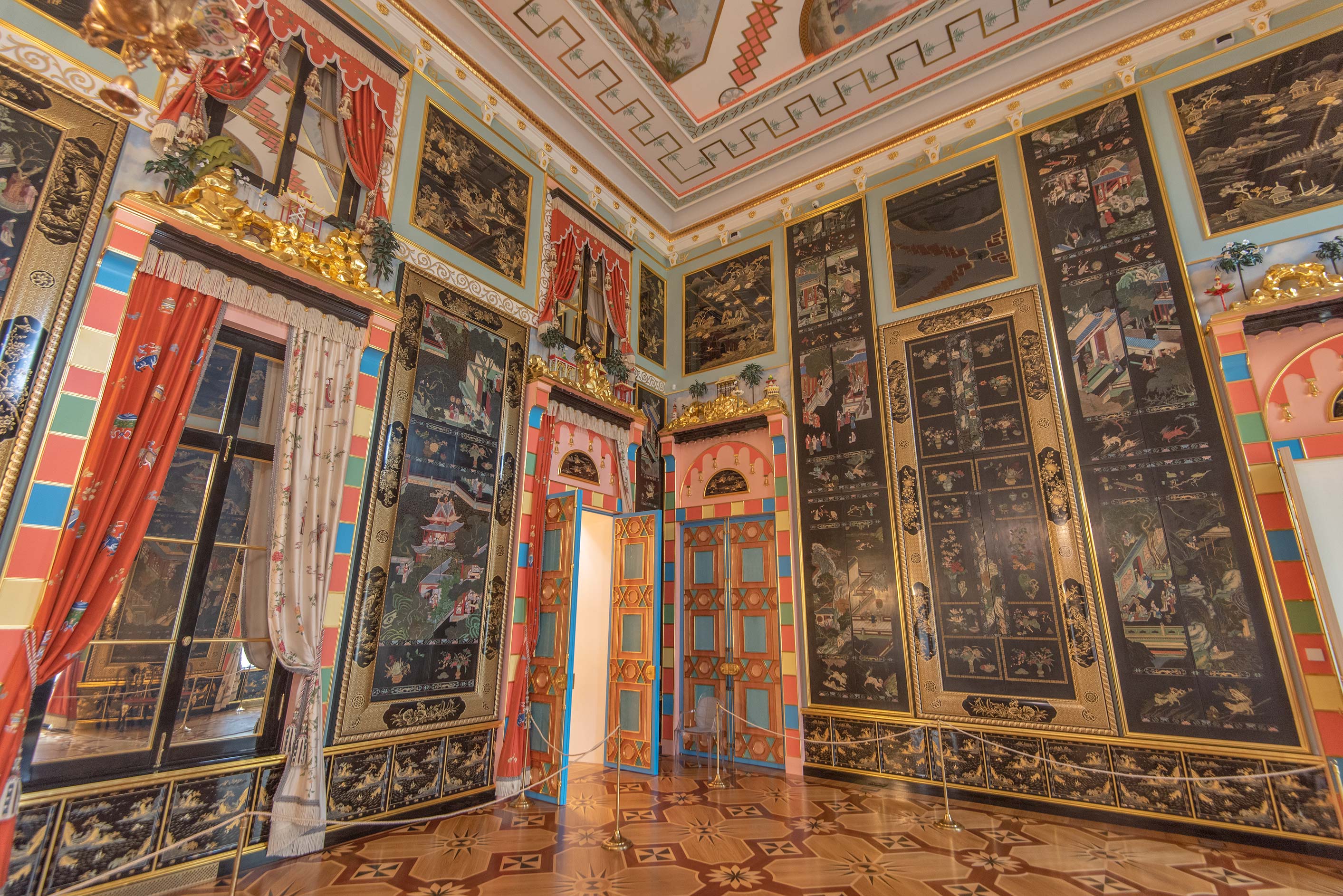
A corner view of the Chinese Hall focuses directly on the intricate wall details, showcasing the massive, floor-to-ceiling black lacquer panels adorned with golden chinoiserie landscapes and figures inside the Zubov Wing of the Catherine Palace. Tsarskoe Selo near Saint Petersburg, Russia, September 6, 2026
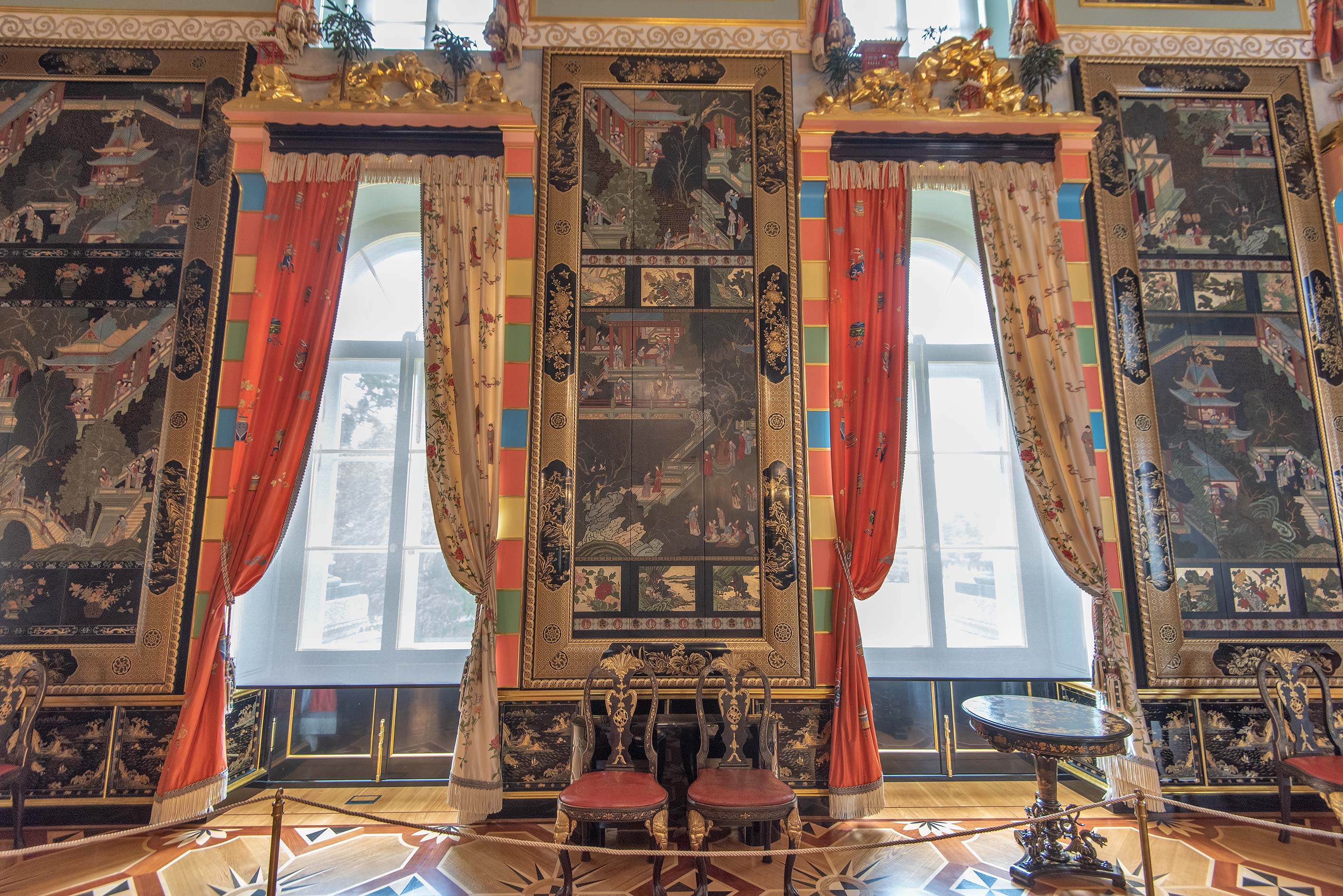
Flat, straight-on view captures a section of the Chinese Hall s side wall, showcasing two large windows flanked by massive, intricate black lacquer panels filled with golden oriental landscapes, buildings, and figures inside the Zubov Wing of the Catherine Palace. Tsarskoe Selo near Saint Petersburg, Russia, September 6, 2026
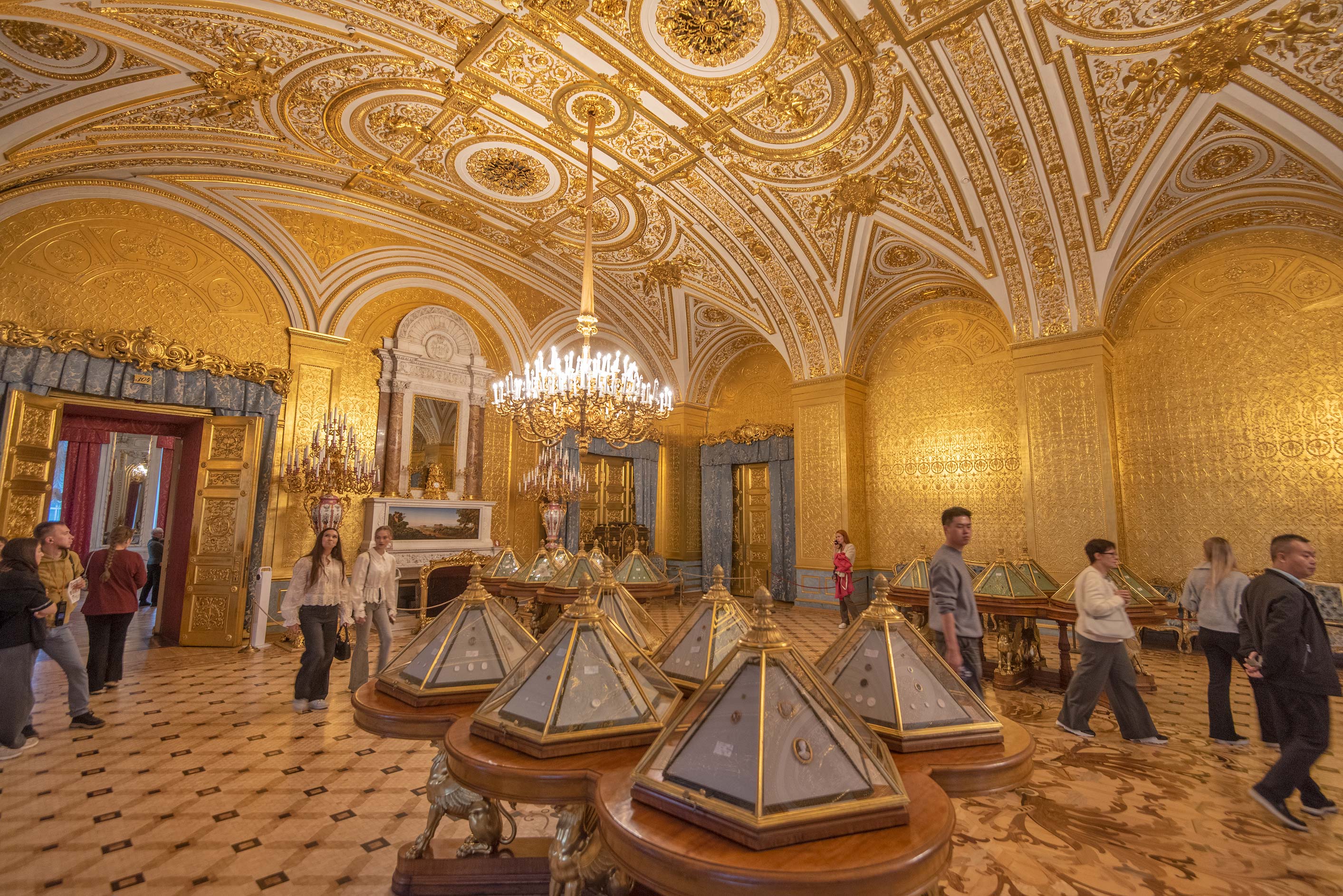
Viewed from a broader angle across the patterned marquetry parquet floor, this scene captures the Golden Drawing Room (Room 304) of the Winter Palace, highlighting the pyramid-topped cameo display cases resting on gilt lion-legged tables in the foreground beneath a central gilt-bronze chandelier and gilded arabesque vaults. Surrounding the visitors, fully gilded walls, blue-grey silk draperies framing carved gilt doors, and a white marble fireplace with a mosaic landscape overmantel complete the 19th-century interior in the State Hermitage Museum in Saint Petersburg, Russia, September 10, 2026
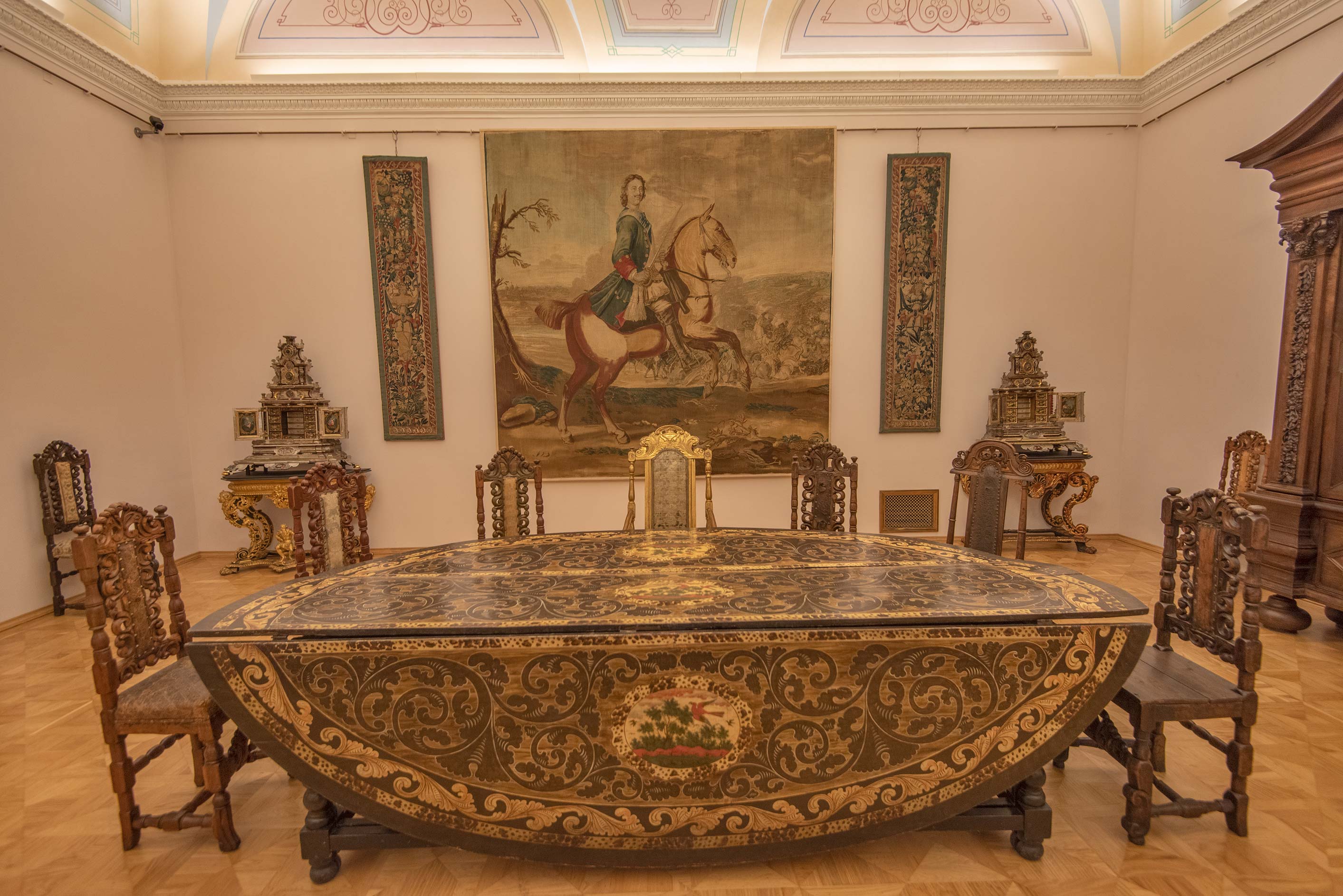
Centered in one of the halls of the Gallery of Peter the Great in the Winter Palace, a large early 18th-century oval gateleg table--intricately inlaid with floral marquetry and a central landscape medallion--stands surrounded by high-backed carved wooden chairs and a gilded armchair on a herringbone parquet floor. On the wall behind it, a monumental woven tapestry depicting Peter the Great on horseback at the Battle of Poltava is flanked by vertical floral tapestry borders, two miniature architectural cabinets on gilded console tables, and a massive carved wooden wardrobe in the State Hermitage Museum in Saint Petersburg, Russia, September 10, 2026

Three bronze statues cast in the late 18th century from antique models stand along the balustrade of the Granite Terrace, including the Medici Venus (right) and a nymph at a basin (center). Framed against mist-shrouded trees and the faint silhouette of the Catherine Palace s Zubov Wing in the distance, the weathered figures overlook the Great Lawn of the Landscape Park in Ekaterininsky (Catherine) Park of Pushkin (former Tsarskoe Selo), a suburb of Saint Petersburg. Russia, September 22, 2026

Rear three-quarter view of the late 18th-century bronze copy of the Apollo Belvedere standing on a red granite pedestal along the Granite Terrace, with a companion statue of Venus (Spinario/Crouching Venus or similar classical nymph) visible on a lower plinth below. Framed by blooming pink roses and autumn foliage tinged with gold and orange in the dense fog, the sculpture overlooks the landscape grounds in Ekaterininsky (Catherine) Park of Pushkin (former Tsarskoe Selo), a suburb of Saint Petersburg. Russia, September 22, 2026

The Monument to Alexander Lanskoi (also known as the Marble Pedestal in Honor of Virtue and Merits), designed in 1773 by architect Antonio Rinaldi, stands atop a grassy slope overlooking a pond in the landscape section of the park. Crafted from grey and pink marble, the rectangular pedestal features a carved bas-relief panel and is crowned by an urn with a flame finial amid early autumn foliage and fog in Ekaterininsky (Catherine) Park of Pushkin (former Tsarskoe Selo), a suburb of Saint Petersburg. Russia, September 22, 2026
