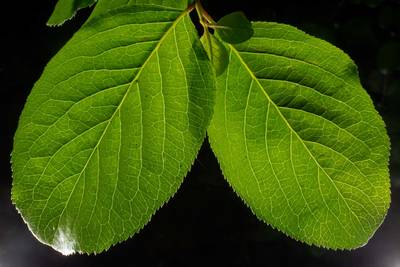
Early spring growth of Berchemia scandens, commonly known as Alabama supplejack or rattan vine. The backlit perspective isolates the young foliage against a dark background, highlighting the bright, translucent green of the newly emerged leaves. At this time of year, these native vines are actively putting out fresh growth as they begin their seasonal climb through the local understory. Lick Creek Park. College Station, Texas, March 25, 2026  Young leaves of rusty blackhaw viburnum (Viburnum rufidulum) in Lick Creek Park. College Station, Texas, March 15, 2026  Back lit young leaves of rusty blackhaw viburnum (Viburnum rufidulum) in Wolf Pen Creek Park. College Station, Texas, March 18, 2026  Leaves of rusty blackhaw viburnum (Viburnum rufidulum) in Lick Creek Park. College Station, Texas, March 12, 2025  Oval leaves of rusty blackhaw viburnum (Viburnum rufidulum) in Lick Creek Park. College Station, Texas, March 24, 2021  Young leaves of rusty blackhaw viburnum (Viburnum rufidulum) in Lick Creek Park. College Station, Texas, March 16, 2023  Leaves of rusty blackhaw viburnum (Viburnum rufidulum) in Lick Creek Park. College Station, Texas, April 6, 2022  Oval leaves of rusty blackhaw viburnum (Viburnum rufidulum) in Wolf Pen Creek Park. College Station, Texas, March 19, 2020  Flowers of rusty blackhaw viburnum (Viburnum rufidulum) in Lick Creek Park. College Station, Texas, March 22, 2019  Round leaf of rusty blackhaw viburnum (Viburnum rufidulum) in Lick Creek Park. College Station, Texas, March 22, 2019  Leaf venation of rusty blackhaw viburnum (Viburnum rufidulum) in Lick Creek Park. College Station, Texas, March 2, 2023  Rusty blackhaw viburnum (Viburnum rufidulum) both in natural light and under 365 nm ultraviolet (UV-A) blacklight in Lick Creek Park. College Station, Texas, March 12, 2025  Blooming rusty blackhaw viburnum (Viburnum rufidulum) in Wolf Pen Creek Park. College Station, March 8, 2024  Flowers of rusty blackhaw viburnum (Viburnum rufidulum) in Wolf Pen Creek Park. College Station, March 8, 2024  Close-up of white flowers of rusty blackhaw viburnum (Viburnum rufidulum) in Wolf Pen Creek Park. College Station, March 8, 2024  Flowers of rusty blackhaw viburnum (Viburnum rufidulum) in Bee Creek Park. College Station, Texas, April 5, 2022  Blooming rusty blackhaw viburnum (Viburnum rufidulum) in Bee Creek Park. College Station, Texas, April 5, 2022  Leaves of rusty blackhaw viburnum (Viburnum rufidulum) on Sand Branch Loop Trail in Sam Houston National Forest near Montgomery. Texas, March 28, 2021  Red leaves of rusty blackhaw viburnum (Viburnum rufidulum)(?) on Richards Loop Trail in Sam Houston National Forest. Texas, December 15, 2020  Rusty blackhaw viburnum (Viburnum rufidulum) on Richards Loop Trail in Sam Houston National Forest. Texas, March 18, 2023  Rusty blackhaw viburnum (Viburnum rufidulum) on Kiwanis Nature Trail at College Hills Elementary. College Station, Texas, April 1, 2022  Flowers of rusty blackhaw viburnum (Viburnum rufidulum) on Kiwanis Nature Trail at College Hills Elementary. College Station, Texas, April 1, 2022  Back lit leaf of rusty blackhaw viburnum (Viburnum rufidulum) in Caney Creek Trail (Little Lake Creek Loop Trail) in Sam Houston National Forest north from Montgomery. Texas, March 20, 2022  a young, actively growing shoot of eastern poison ivy (Toxicodendron radicans) emerging from the shadows of a thicket. The image is dramatically lit, isolating the central stem and fresh leaves against a nearly pitch-black background, which brings the complex textures and colors of the plant into sharp relief. The lighting emphasizes the plant s characteristic "leaves of three" structure, making the distinct anatomy of the new spring growth unmistakably clear. Wolf Pen Creek Park. College Station, Texas, March 23, 2026  Fresh, newly emerged foliage of Virginia creeper (Parthenocissus quinquefolia) in Bee Creek Park. College Station, Texas, March 26, 2026  Delicate, fuzzy emergence of new oak foliage in early spring, backlit to highlight its soft pink and green hues. Below the newly unfolding, distinctly lobed leaves dangle the tree s string-like catkins--the male flower clusters that release pollen just as the canopy breaks dormancy. Lake Somerville Trailway near Nails Creek Unit of Somerville Lake State Park. Texas, March 29, 2026  A miniature procession of rust-colored ants traverses the deeply grooved, dry bark of an oak tree. In the center foreground, one ant acts as the focal point, hoisting a freshly cut, bright green slice of an oak leaf high above its head. Because the leaf fragment curves directly over the ant s body like a small green canopy, it perfectly illustrates why this species is often nicknamed the "parasol ant". Surrounding this central figure, three other ants march in the same direction, each carrying large, beaded green oak catkins gripped tightly in their mandibles. These are Texas leafcutter ants (Atta texana), a native species famous for its highly organized and destructive foraging behavior. Working in massive, coordinated trails that can span hundreds of feet, worker ants climb into the canopies of oaks and other trees to systematically slice away fresh, tender vegetation. The workers possess powerful jaws capable of cutting through leaves and flowers with remarkable speed, allowing a large colony to completely strip the foliage from a small tree in a single night. Lake Somerville Trailway near Nails Creek Unit of Somerville Lake State Park. Texas, March 14, 2026  Young leaves of arrowwood viburnum (Viburnum dentatum) in Big Creek Scenic Area of Sam Houston National Forest. Shepherd, Texas, March 20, 2021  Dynamic display of autumn color and texture in Upper Park. The image highlights a grove of white-barked trees--likely birch or aspen--whose bright trunks are textured with patches of green moss and lichen. These vertical lines contrast beautifully with the chaotic, horizontal spread of the crimson undergrowth (likely wild shrubs like dogwood). Oranienbaum palace-and-park ensemble in Lomonosov (a suburb of St. Petersburg), Russia, October 13, 2025  Layered complexity of the mixed deciduous forest in Alexander Park. The image is a study in yellow, dominated by the luminous canopy of Norway maples and silver birches. The rough, dark bark of the oaks and maples provides a strong vertical rhythm that cuts through the delicate, hazy texture of the foliage. The white, paper-like bark of the birch trees adds a secondary visual accent typical of the Russian landscape. The composition includes a rich understory of turning shrubs--likely hazel or young rowan--which adds density and depth, grounding the soaring trunks in a thicket of earthy reds and browns. Aleksandrovsky (Alexander) Park in Pushkin (former Tsarskoe Selo) near Saint Petersburg, Russia, October 10, 2025  "Golden Autumn" in Upper Park. The image highlights a mix of deciduous and coniferous trees. Tall spruce trees (dark green) stand in contrast to the vibrant yellow of the maples and lindens, creating a rich texture and color palette typical of the Upper Park s diverse planting design. Oranienbaum palace-and-park ensemble in Lomonosov (a suburb of St. Petersburg), Russia, October 13, 2025  Intricate floral structure of hollow Joe-Pye weed (Eutrochium fistulosum) in Watson Rare Native Plant Preserve. Warren, Texas, June 21, 2026  Young leaves of arrowwood viburnum (Viburnum dentatum) on Caney Creek section of Lone Star Hiking Trail in Sam Houston National Forest north from Montgomery. Texas, February 25, 2024  Green immature berries of Manchurian Viburnum (Viburnum burejaeticum) in Botanic Gardens of Komarov Botanical Institute. Saint Petersburg, Russia, August 22, 2013  Flower buds of arrowwood viburnum (Viburnum dentatum) in Big Creek Scenic Area of Sam Houston National Forest. Shepherd, Texas, March 20, 2021  Anglepod Milkvine (Gonolobus suberosus) is a native climbing milkweed recognized by its heart-shaped leaves and distinctive five-angled seed pods. The striking yellow mosaic highlights its intricate veins due to a condition called chlorosis. Lake Somerville Trailway near Nails Creek Unit of Somerville Lake State Park. Texas, March 29, 2026  This composite image documents four stems of Hedeoma hispida (Rough False Pennyroyal) demonstrating the plant s appearance under two different lighting conditions against a dark background. The top panel shows the specimens under standard white light. The stems feature opposite, linear leaves and are covered in fine, bristly hairs, giving the plant its "rough" descriptor. Clusters of tiny, tubular, purplish-blue flowers emerge from the leaf axils along the upper portions of the stems, nestled within spiky, bristly calyces. The overall coloration is a vibrant, natural green with delicate violet floral accents. The bottom panel reveals the same four specimens illuminated by a 365 nm ultraviolet (UV-A) blacklight. Under UV excitation, the plant exhibits striking fluorescence. The previously purplish-blue flowers fluoresce a brilliant, vivid pinkish-red, while the green stems, leaves, and bristly hairs emit a cool, icy blue-white glow. This stark contrast highlights the complex photochemical properties of the plant tissues, transforming the subtle daytime appearance into a dramatic, high-contrast display. College Station, Texas, April 30, 2026 Blooming Rough False Pennyroyal (Hedeoma hispida) both in natural light and under 365 nm ultraviolet (UV-A) blacklight collected on a lawn at crossing of Holleman Drive and Dartmouth Street. College Station, Texas, April 30, 2026  Several rust-colored, spiky-bodied ants can be seen navigating the deeply furrowed bark of an oak tree, acting as a miniature logging crew. Some of the ants are carrying entire green, beaded oak catkins--the tree s string-like flower clusters--while one prominently hoists a freshly cut, bright green section of an oak leaf in its jaws. The ants carry these heavy loads hoisted high over their heads, a posture that resembles someone carrying a sunshade. These are Texas leafcutter ants (Atta texana), a highly destructive but fascinating native species also known as the "town ant" or "parasol ant" due to their unique carrying technique. They climb high into the canopies of oaks and other trees to use their powerful, scissor-like mandibles to slice away fresh foliage, preferring new, tender, high-water-content growth like young leaves and spring catkins. Working in massive, organized trails, a large colony can entirely strip the leaves from a small- to medium-sized tree in a single night, and they frequently travel hundreds of feet from their underground nests to find a suitable harvest. Lake Somerville Trailway near Nails Creek Unit of Somerville Lake State Park. Texas, March 14, 2026  Monochromatic texture, moving away from high contrast to explore the subtle variations within a single color range. The scene is dominated by a spectrum of yellows, from the pale ochre of the birch leaves to the deep amber of the maples, creating a "wall of gold" that feels immersive and enclosing. The overlapping layers of foliage--dense understory merging into the mid-canopy--eliminate the sky, focusing the viewer entirely on the intricate, lace-like pattern of the leaves against the dark vertical trunks. The reflection in the water breaks these details into impressionistic strokes, blurring the line between the real trees and their mirrored image, much like a watercolor painting where forms dissolve into light and color. Aleksandrovsky (Alexander) Park in Pushkin (former Tsarskoe Selo) near Saint Petersburg, Russia, October 10, 2025  This cross-section of a Tomatillo (Mexican husk tomato, Physalis philadelphica) reveals its internal structure under two different lighting conditions. Top Image (Visible Light): The fruit is a two-carpellate berry, which means it is divided into two main internal chambers (locules) filled with seeds. One can see the fleshy placenta in the center where the small, flat, yellowish seeds are attached. The entire fruit is enclosed in a papery, green husk (calyx) that has expanded to cover the berry as it matured. Bottom Image (UV Fluorescence): Under ultraviolet light, the tomatillo displays a striking fluorescence. The bluish-white glow in the center is likely due to phenolic compounds or other metabolites common in plant tissues that fluoresce under UV. The outer ring glows a distinct orange-red. This is characteristic of chlorophyll fluorescence. College Station, Texas, November 6, 2025  Focusing closer, the photograph reveals the intricate, densely packed structure of the cursed buttercup (Ranunculus sceleratus) as it colonizes the dried mud. The plants exhibit a vibrant, fleshy appearance, characterized by deeply lobed, shiny green leaves that vaguely resemble flat-leaf parsley or young celery--giving the plant its alternate name, the celery-leaved buttercup. In this dense thicket, the stout, hollow stems branch frequently, creating a tangled, multi-layered canopy. Tiny, five-petaled pale yellow flowers dot the upper stems, standing out brightly against the dark backdrop of the soil and the deeper green foliage below. Flag Pond near Nails Creek Unit of Somerville Lake State Park. Texas, March 14, 2026  Fresh foliage of an oak tree in Bee Creek Park. College Station, Texas, March 26, 2026  A large, heavily rusted metal pipe spanning horizontally across a ravine. The thick cylindrical pipe, completely oxidized from long-term exposure to the elements, serves as a stark piece of man-made infrastructure cutting directly through the natural landscape. Its dark, weathered surface stretches across the frame, contrasting sharply with the lighter earthy tones of the surrounding environment. In the near foreground, the engineering used to secure the pipeline is clearly visible. The heavy steel pipe rests securely on a square, poured-concrete abutment built directly into the creek bank. Two bright, unweathered metal retaining straps wrap over the top of the pipe, firmly bolted into the solid concrete base. These shiny galvanized brackets anchor the structure to the ground, designed to prevent the heavy cylinder from shifting under internal pressure or environmental stress. Lick Creek Park. College Station, Texas, March 25, 2026  Fresh leaves of elm in Lick Creek Park. College Station, Texas, March 15, 2026  Fresh oak leaves and catkins in Lick Creek Park. College Station, Texas, March 15, 2026  Fruits of Manchurian Viburnum (Viburnum burejaeticum) in Botanic Gardens of Komarov Botanical Institute. Saint Petersburg, Russia, August 22, 2013  Arrowwood viburnum (Viburnum dentatum) when exposed to regular daylight as well as when illuminated by a 365 nm ultraviolet (UV-A) blacklight from Sam Houston National Forest. Richards, Texas, October 12, 2024  Immature berries of Manchurian Viburnum (Viburnum burejaeticum) in Botanic Gardens of Komarov Botanical Institute. Saint Petersburg, Russia, August 22, 2013  Fresh green leaves in Lick Creek Park. College Station, Texas, March 20, 2023  Pink immature berries of Manchurian Viburnum (Viburnum burejaeticum) in Botanic Gardens of Komarov Botanical Institute. Saint Petersburg, Russia, August 22, 2013  Romantic melancholy of the Russian "Golden Autumn," a recurring theme in both landscape design and literature. The dark, still water acts as a "black mirror," doubling the impact of the golden foliage while adding a somber, contemplative depth to the scene. The contrast between the fading green aquatic grasses, the rusty-red dogwood underbrush, and the bright yellow canopy creates a rich, painterly texture reminiscent of Levitan s landscapes. The framing of the water by dense, encroaching vegetation emphasizes the "wild" nature of this park section, moving away from the formal geometry of the canals toward an intimate, secluded atmosphere. Aleksandrovsky (Alexander) Park in Pushkin (former Tsarskoe Selo) near Saint Petersburg, Russia, October 10, 2025  Fresh leaves of oak under both white light and a 365 nm ultraviolet (UV-A) LED flashlight in Lick Creek Park. College Station, Texas, March 3, 2026  Some rusty spots on underside surface of leaves of Yaupom holly in Lick Creek Park. College Station, Texas, March 15, 2026  Fresh leaves of Viburnum in Peter the Great Botanical Garden of Komarov Botanical Institute. Saint Petersburg, Russia, May 7, 2019  This scene showcases a sophisticated understanding of color layering in landscape design, using native species to create depth. The distinct red-purple haze of the Red-barked dogwood (Cornus alba or Swida alba) in the foreground acts as a grounding base, contrasting sharply with the luminous yellow of the maples and the vertical white lines of the birch trunks behind it. The dogwood s dense, fine twig structure (which turns vibrant blood-red in winter) adds a chaotic, bushy texture that complements the more open, airy canopy of the deciduous forest. This composition highlights the transition of seasons; while the canopy glows with "golden autumn," the understory dogwood is already revealing the red bark that will provide visual interest throughout the snowy Russian winter. Aleksandrovsky (Alexander) Park in Pushkin (former Tsarskoe Selo) near Saint Petersburg, Russia, October 10, 2025  Pleated shield mushrooms (Pluteus longistriatus) on mulch on mulch at native plant display behind Nature Center in Lick Creek Park. College Station, Texas, March 11, 2019  Spider lily (Hymenocallis) at native plant display in Lick Creek Park. College Station, Texas, June 28, 2019  Fruits of some tall spurge (Euphorbia) on native plant display in Lick Creek Park. College Station, Texas, August 25, 2019  Slender Starburst Moss (Atrichum angustatum). The striking bronze, copper, or rusty-brown color is completely normal for this time of year. Mosses in this family often take on these deep reddish-brown or golden hues during the cold or dry months. The moss is in its winter dormancy state. Fort Boggy State Park. Leon County, Texas, February 21, 2026  Young leaves of black cherry in Lick Creek Park. College Station, Texas, March 25, 2026  On the dry bottom of Flag Pond, the exposed basin was covered with an almost continuous green-and-yellow carpet of cursed buttercup (Ranunculus sceleratus), turning what is usually open water into a bright spring sheet of bloom. The plants spread densely across the dark, uneven mud, with only a few bare patches and scattered taller shoots breaking the surface of the low, fine-textured vegetation.The broad open expanse, distant tree line, and heavy gray clouds make the scene feel both striking and a little surreal, as if the pond has briefly become a flowering meadow. Near Nails Creek Unit of Somerville Lake State Park. Texas, March 14, 2026  This comparative photo contrasts a salad in natural light (top) with its hidden chemical fluorescence under 365 nm ultraviolet light (bottom). The glowing blue-white haze on the seemingly empty ceramic plate exposes microscopic traces of organic residue and fats left over from previous meals. The brightest glow comes from the cottage cheese, which emits a brilliant yellow-green light due to its high riboflavin and protein content. The plant ingredients show a more subtle, tissue-specific response: green olives shift to a pale salmon hue from chlorophyll and phenols, while the red pepper[CloseCurlyQuote]s thin cuticles light up in blue-purple tones. In contrast, the water-dense cucumber and tomato slices absorb most of the UV light and remain dark against the glowing background. College Station, Texas, May 2, 2026  Psychedelic mushrooms Psilocybe cubensis on mulch at native plant display behind a new Nature Center in Lick Creek Park. College Station, Texas, October 3, 2018  Psychedelic mushrooms Psilocybe cubensis on mulch at native plant display behind Nature Center in Lick Creek Park. College Station, Texas, October 24, 2018  Masses of psychedelic mushrooms Psilocybe cubensis on mulch at native plant display behind a new Nature Center in Lick Creek Park. College Station, Texas, October 3, 2018  Group of psychedelic mushrooms Psilocybe cubensis on mulch at native plant display behind Nature Center in Lick Creek Park. College Station, Texas, October 24, 2018  Mushrooms Marasmiellus candidus on black background in Lick Creek Park. College Station, Texas, June 11, 2026  Saint Petersburg courtyard near Svetlanovsky Prospekt during "Golden Autumn" (Zolotaya Osen). The foliage is in a transitional phase where the trees are displaying their most vibrant colors (bright yellows and oranges) before shedding completely. The area around Svetlanovsky Prospekt (Vyborgsky/Kalininsky districts) is characterized by residential blocks from the 1960s and 1970s. Unlike the dense city center, these blocks were designed with large, open courtyards (dvory) intended to act as "green lungs" for residents. Russia, October 10, 2025  Some fresh leaves in dew in Lick Creek Park. College Station, Texas, March 11, 2019  Fresh leaves of willow oak in Lick Creek Park. College Station, Texas, March 20, 2023  Fresh leaves of some tree in Lick Creek Park. College Station, Texas, March 11, 2019  Viburnum tinus flowers in TAMU Horticultural Gardens in Texas A and M University. College Station, Texas, March 22, 2010.  Gulf of Finland coastline, with shallow waters and glacial boulders. Behind the rocky beach, there is a zone of Common Reed (Phragmites australis), which is ubiquitous along the Neva Bay coast. The trees include Scots Pine (Pinus sylvestris)--the tall conifer with orange bark on the right--and Black Alder or Birch, which are typical for these damp, sandy soils. The pines here are often twisted by the strong westerly winds. Tarkhovka Park near Sestroretsk, west from Saint Petersburg. Russia, October 3, 2025  Pink flower buds of Viburnum tinus in TAMU Holistic Garden in Texas A and M University. College Station, Texas, March 18, 2010.  Fresh leaves of willow oak on Post Oak Trail in Lick Creek Park. College Station, Texas, March 12, 2024  Fresh leaves of Mexican plum on Post Oak Trail in Lick Creek Park. College Station, Texas, March 12, 2024  A sprawling, multi-stemmed mat of annual trampweed (Facelis retusa) growing on the sandy shore of Lake Somerville, Texas. This tough winter annual is a member of the aster family and a close relative of native cudweeds. It is easily identified by its narrow, gray-green leaves that feature distinctly blunted or notched tips (retuse) and bright white, woolly undersides. At the center of the plant, there are small, tight flower heads beginning to form at the tips of the stems. Texas, February 28, 2026  Banded mottlegill (Panaeolus cinctulus) on black background in Wolf Pen Creek Park. College Station, Texas, May 7, 2026 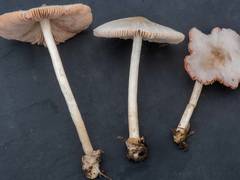 Rosegill mushrooms Volvariella pusilla on black background from a lawn in Bee Creek Park. College Station, Texas, May 26, 2026  The park s blend of formal structure and natural landscape during autumn. The image captures a long, straight avenue typical of the park s 18th-century layout, creating a mesmerizing "tunnel" effect. :200b Oranienbaum palace-and-park ensemble in Lomonosov (a suburb of St. Petersburg), Russia, October 13, 2025  Majestic, mature trees in the Upper Park that define the landscape s romantic character. The massive, gnarled branches of an old oak tree dominate the foreground, framing the view with their dark bark and patches of green moss. Its remaining leaves are a mix of rusty orange and brown, contrasting with the brighter yellow foliage of the surrounding maples. Beneath the trees, a dense thicket of shrubs (dogwood) creates a vibrant layer of red and pink tones. This rich undergrowth adds warmth and complexity to the autumn palette, which is primarily golden-yellow. Oranienbaum palace-and-park ensemble in Lomonosov (a suburb of St. Petersburg), Russia, October 13, 2025 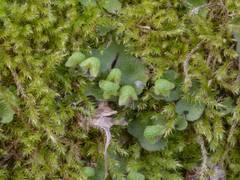 Male plant of the liverwort Asterella tenella (Delicate Starwort). The strange, bright green, elevated, wart-like cushions sitting right on top of the leaves (thalli) are the male reproductive structures, called antheridial pads or male receptacles. Fort Boggy State Park. Leon County, Texas, February 21, 2026  Leaves of yaupon holly (Ilex vomitoria) with black spots caused by rust like fungus on black background in Hensel Park. College Station, Texas, June 5, 2019  Reddish webcap mushrooms Cortinarius bolaris(?) on black background on Yaupon Loop Trail in Lick Creek Park. College Station, Texas, March 9, 2024  Green form of chrysalis (pupal stage of butterfly) of Black Swallowtail formed on a plant stem in Lick Creek Park. College Station, Texas, June 1, 2010  Fresh shoot of poison ivy in Bee Creek Park. College Station, Texas, March 20, 2026  Bright orange cap on black background of a small mushroom Agaricus sect. Minores on Kiwanis Nature Trail. College Station, Texas, April 4, 2020  Fall colors of viburnum leaves in Botanic Gardens of Komarov Botanical Institute. Saint Petersburg, Russia, September 18, 2013  A close look at the distinctive, bristly texture of a Pincushion Moss (Leucobryum species) found near Lake Trail at Fort Boggy State Park. While often casually identified as Leucobryum glaucum, this is almost certainly its southern sister species, Leucobryum albidum (White Pincushion Moss), which is much more common in East Texas. The moss gets its pale, frosted-green color from a unique leaf structure: the outer layers consist of large, clear, hollow cells that hide the green chlorophyll beneath. When it rains, these empty cells fill with water and turn the cushion bright green; when dry, they fill with air, giving the plant a silvery-white appearance. Fort Boggy State Park. Leon County, Texas, February 21, 2026 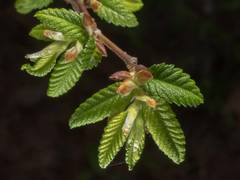 Young leaves of elm in Lick Creek Park. College Station, Texas, March 7, 2026  Psychedelic mushrooms Psilocybe cubensis on mulch on native plants display behind Nature Center in Lick Creek Park. College Station, Texas, October 17, 2018  A scene of the Karasta River in Upper Park. The shallow, rocky river flows gently towards a rustic, arched stone bridge in the background, which acts as a romantic focal point nestled deep within the foliage. Oranienbaum palace-and-park ensemble in Lomonosov (a suburb of St. Petersburg), Russia, October 13, 2025 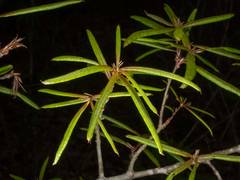 Young leaves of willow oak in Lick Creek Park. College Station, Texas, March 25, 2026 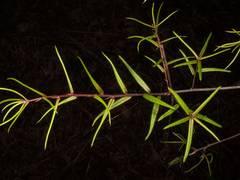 Young leaves of willow oak in Lick Creek Park. College Station, Texas, March 15, 2026  Cinnamon navel mushrooms (Omphalina pyxidata) on black background in Watson Rare Native Plant Preserve. Warren, Texas, November 16, 2024  Polypore mushroom Amylosporus campbellii on black background from Lemontree Park. College Station, Texas, July 1, 2026  In the caked mud of Flag Pond, a bright green, bushy seedling of cursed buttercup (Ranunculus sceleratus) emerges strongly from the deep fissures. Beside it lies a single, perfectly round, olive-green leaf of an American lotus (Nelumbo lutea) seedling, dotted with a few tiny water droplets that highlight its water-repellent surface. Scattered around these two fresh sprouts are the thick, dried, gray-brown stalks of mature lotus plants from a previous growing season, resting lifelessly across the severely fractured, dry earth. Near Nails Creek Unit of Somerville Lake State Park. Texas, March 14, 2026  Rusty roof of an abandoned bat observation cabin in Lick Creek Park. College Station, Texas, January 15, 2026  Young leaves of black cherry in Lick Creek Park. College Station, Texas, March 16, 2023 |