 |
| |||||||||||||||

| ||||||||||||||||


| Similar | 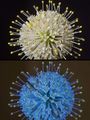  |
  |
  |
  |
  |
| |||||||||||||||||||||||||||
| |||||||||||||||||||||||||||
| 1996 1997 1998 1999 2000 2001 2002 2003 2004 2005 2006 2007 2008 2009 2010 2011 2012 2013 2014 2015 2016 2017 2018 2019 2020 2021 2022 2023 2024 2025 2026 | |||||||||||||||||||||||||||
| New version Slide Show Most Popular Full List Statistics Technical Details Home Page | |||||||||||||||||||||||||||
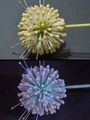
The image presents a striking comparison of Buttonbush flowers under two distinct lighting conditions: regular daylight and UV-A blacklight illumination. The top photo showcases the flower's appearance in natural light, while the bottom photo reveals its unique response to UV-A radiation. **Coloration Comparison** * **Daylight**: The flower exhibits a predominantly white coloration with subtle yellow accents. **Visual Effects and Implications** The dramatic change in coloration is likely due to the presence of anthocyanins, flavonoids that absorb light in the blue region of the visible spectrum and reflect longer wavelengths. This phenomenon results in the characteristic "blueing" effect seen in many plants exposed to UV-A radiation. **Comparison and Analysis** The two photos demonstrate the distinct visual effects produced by natural daylight versus UV-A blacklight illumination. The flower's response to UV-A radiation highlights the complex interplay between light absorption and reflection in plant pigmentation, showcasing the intricate mechanisms that govern plant coloration. – AI vision |
El botón de arbusto (Cephalanthus occidentalis) cuando se expone a la luz diurna habitual y cuando se ilumina con una lámpara negra ultravioleta (UV-A) de 365 nm desde el Parque Lick Creek. College Station, Texas, 8 de septiembre de 2024. La imagen presenta una comparación sorprendente de las flores del botón de arbusto en dos condiciones de iluminación distintas: luz diurna habitual e iluminación con lámpara negra UV-A. La foto superior muestra la apariencia de la flor a la luz natural, mientras que la foto inferior revela su respuesta única a la radiación UV-A. **Comparación de Colores** * **Luz diurna**: La flor exhibe una coloración predominantemente blanca con sutiles acentos amarillos. * **UV-A Blacklight**: Bajo la radiación UV-A, la flor se transforma en un tono azul intenso. **Efectos Visuales e Implicaciones** El cambio dramático de coloración es probablemente debido a la presencia de antocianinas, flavonoides que absorben luz en la región azul del espectro visible y reflejan longitudes de onda más largas. Este fenómeno produce el característico efecto "azulado" visto en muchas plantas expuestas a radiación UV-A. **Comparación y Análisis** Las dos fotos demuestran los distintos efectos visuales producidos por la luz diurna natural versus la iluminación con lámpara negra UV-A. La respuesta de la flor a la radiación UV-A destaca la compleja interacción entre absorción y reflexión en la pigmentación de las plantas, destacando los mecanismos intrincados que rigen la coloración de las plantas. – Spanish translation |
Keyword variants
Lick Creek Park color photograph
high resolution online digital collection
Berlin on the Brazos
Rock Prairie Rd
Lone Star State
Greens Prairie Road
United States
picture gallery
photo album
nature trails
Nature Park
Honey-bells
globular inflorescence
documentary photographs
daily pics
conservative town
Button-willow
buttonbush pix
Brazos County
wildlife
wetland
TX
travelogue
snapshots
sightseeing
shrub
Rubiaceae
photowalks
photoblog
madder
graphic
fotografias
foto
Bryan
America
Aggieland