Home Page > Picture Archives > Year 2024 > Album 3623 > Photo 19          
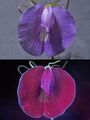
Pencil flower (Stylosanthes biflora) when exposed...in Sam Houston National Forest. Texas  
Previous
Previous
Next
Next
Browse current photo album: College Station-Sam Houston Forest, Texas

Pencil flower (Stylosanthes biflora) when exposed to regular daylight as well as when illuminated by a 365 nm ultraviolet (UV-A) blacklight from Richards Loop Trail in Sam Houston National Forest. Texas, September 21, 2024

#3623-19
a
Thumbnail 3623-19: Pencil flower (Stylosanthes biflora...National Forest. Texas Show full size picture

Histogram
Shooting data

X-Large Image
Similar   Thumbnail of picture 3607-23: Flower of butterfly pea (Centrosema virginianum) when exposed to ... Houston National Forest. Texas, August 24, 2024 Thumbnail of picture 3607-22: Flower of Pigeon wings (Clitoria mariana) when exposed to regular ... Houston National Forest. Texas, August 24, 2024 Thumbnail of picture 3623-16: Orange milkweed (Asclepias tuberosa) when exposed to regular daylight ... Houston National Forest. Texas, September 21, 2024 Thumbnail of picture 3623-17: Wild petunia (Ruellia caroliniensis(?)) when exposed to regular ... Houston National Forest. Texas, September 21, 2024 Thumbnail of picture 3623-20: Mountain mint (Pycnanthemum tenuifolium) when exposed to regular ... Houston National Forest. Texas, September 21, 2024
1996  1997  1998  1999  2000  2001  2002  2003  2004  2005  2006  2007  2008  2009  2010  2011  2012  2013  2014  2015  2016  2017  2018  2019  2020  2021  2022  2023  2024  2025  2026 
New version    Slide Show    Most Popular    Full List    Statistics    Technical Details         Home Page

The image presents a striking contrast between two photographs of the same pencil flower species, Stylosanthes biflora. The top photograph showcases the flower under normal daylight conditions, while the bottom one highlights its unique features when illuminated by a 365 nm ultraviolet (UV-A) blacklight.

**Daylight Conditions:**

* **Flower Color:** In the daytime image, the flowers display a vibrant yellow color.
* **Background:** The background is dark gray, providing a subtle contrast to the flower's bright hue.

**Ultraviolet Light Exposure:**

* **Flower Color Change:** When exposed to UV-A blacklight, the flowers undergo a significant transformation. They transition from their natural yellow color to a deep pinkish-red shade.
* **Background:** The background remains dark gray in both images but appears slightly darker when illuminated by the UV-A blacklight.

**Comparison and Observations:**

* **Color Intensity:** The flower's color becomes more intense under UV-A light, with the pinkish-red hue being more pronounced than the yellow.
* **Background Contrast:** Although the background remains dark gray in both images, it appears slightly darker when illuminated by the UV-A blacklight, creating a subtle contrast between the two photographs.

In summary, the image effectively demonstrates the transformative effect of UV-A light on the pencil flower's coloration. The comparison between the daytime and nighttime images highlights the unique features of this species when exposed to specific wavelengths of light. – AI vision

Flor de lápiz (Stylosanthes biflora) cuando se expone a la luz diurna regular, así como cuando se ilumina con una lámpara negra de ultravioleta de 365 nm desde el Richards Loop Trail en el bosque nacional Sam Houston. Texas, septiembre 21, 2024. La imagen presenta un contraste sorprendente entre dos fotografías de la misma especie de flor de lápiz, Stylosanthes biflora. La fotografía superior muestra la flor en condiciones de luz diurna normal, mientras que la inferior destaca sus características únicas cuando se ilumina con una lámpara negra ultravioleta de 365 nm (UV-A).
**Condiciones de luz diurna:**
* **Color de las flores:** En la imagen diurna, las flores muestran un color amarillo vibrante.
* **Fondo:** El fondo es gris oscuro, proporcionando un contraste sutil con el tono brillante de las flores.
**Exposición a luz ultravioleta:**
* **Cambio de color de las flores:** Al exponerlas a la luz UV-A, las flores sufren una transformación significativa. Pasan de su color natural amarillo a un tono rosado oscuro.
* **Fondo:** El fondo sigue siendo gris oscuro en ambas imágenes pero parece ligeramente más oscuro cuando se ilumina con la luz UV-A.
**Comparación y observaciones:**
* **Intensidad del color:** El color de las flores se vuelve más intenso bajo la luz UV-A, siendo el tono rosado más pronunciado que el amarillo.
* **Contraste de fondo:** Aunque el fondo sigue siendo gris oscuro en ambas imágenes, parece ligeramente más oscuro cuando se ilumina con la luz UV-A, creando un sutil contraste entre las dos fotografías.
En resumen, la imagen demuestra de forma eficaz el efecto transformador de la luz UV-A en la coloración de la flor de lápiz. La comparación entre las imágenes diurna y nocturna destaca las características únicas de esta especie cuando se expone a longitudes de onda específicas de luz. – Spanish translation


Keyword variants

high resolution online digital collection
Richards Loop Trail snapshot
Houston National Forest picture
Lone Star State
United States
picture gallery
photo album
documentary photographs
daily pics
TX
travelogue
snapshots
sightseeing
photowalks
photoblog
graphic
fotografias
foto
America