 |
| |||||||||||||||

| ||||||||||||||||


| Similar | 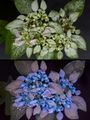  |
  |
  |
  |
  |
| |||||||||||||||||||||||||||
| |||||||||||||||||||||||||||
| 1996 1997 1998 1999 2000 2001 2002 2003 2004 2005 2006 2007 2008 2009 2010 2011 2012 2013 2014 2015 2016 2017 2018 2019 2020 2021 2022 2023 2024 2025 2026 | |||||||||||||||||||||||||||
| New version Slide Show Most Popular Full List Statistics Technical Details Home Page | |||||||||||||||||||||||||||
The image presents a comparative analysis of mountain mint (Pycnanthemum tenuifolium) under two distinct lighting conditions: regular daylight and ultraviolet (UV-A) illumination using a 365 nm blacklight. **Composition** * The top half of the image features a close-up photograph of mountain mint in natural daylight, with leaves and flowers visible. **Lighting Conditions** * The top half showcases the plant's appearance under regular daylight conditions, highlighting its greenish-gray leaves and pale blue or purple flowers with white stamens. **Overall Impression** The image effectively demonstrates the impact of different lighting conditions on the appearance of mountain mint. The use of a UV-A blacklight enhances the visibility of specific compounds in the plant, such as nectar guides or ultraviolet-reflecting pigments, which are invisible to the human eye under regular daylight conditions. This comparison allows for a more detailed understanding of the plant's structure and function. **Key Takeaways** * Mountain mint appears similar in both daylight and UV-A blacklight illumination. |
La hierba de montaña (Pycnanthemum tenuifolium) cuando se expone a la luz del día regular, así como también cuando se ilumina con una luz negra ultravioleta (UV-A) de 365 nm desde el Sendero Richards Loop en el Bosque Nacional Sam Houston. Texas, 21 de septiembre de 2024. La imagen presenta un análisis comparativo de la hierba de montaña (Pycnanthemum tenuifolium) bajo dos condiciones de iluminación distintas: luz del día regular e iluminación ultravioleta (UV-A) usando una luz negra de 365 nm. **Composición** * La mitad superior de la imagen presenta una fotografía en primer plano de la hierba de montaña con luz natural del día, donde se ven las hojas y flores. * La mitad inferior presenta una vista idéntica de la planta iluminada por una luz negra UV-A desde el Sendero Richards Loop en el Bosque Nacional Sam Houston, Texas. **Condiciones de Iluminación** * La mitad superior muestra la apariencia de la planta bajo condiciones de luz del día natural, destacando sus hojas grisáceo verdes y flores pálidas azules o moradas con estambres blancos. * En contraste, la mitad inferior revela la misma planta iluminada por una luz negra UV-A de 365 nm, que hace que las flores destaquen en rosa y azul brillante. **Impresión General** La imagen demuestra efectivamente el impacto de diferentes condiciones de iluminación en la apariencia de la hierba de montaña. El uso de una luz negra UV-A potencia la visibilidad de compuestos específicos en la planta, como guías de néctar o pigmentos reflectantes ultravioleta, que son invisibles al ojo humano bajo condiciones de luz del día natural. Esta comparación permite una comprensión más detallada de la estructura y función de la planta. **Conclusiones clave** * La hierba de montaña parece similar en iluminación diurna regular y UV-A negro. * El uso de un luz negra UV-A revela detalles adicionales sobre la anatomía de la planta, incluyendo la presencia de pigmentos reflectantes ultravioleta. * Este análisis comparativo destaca la importancia de considerar diferentes condiciones de iluminación al estudiar las plantas. – Spanish translation |
Keyword variants
Richards Loop Trail picture show
high resolution online digital collection
Houston National Forest images
Lone Star State
United States
picture gallery
photo album
documentary photographs
daily pics
TX
travelogue
snapshots
sightseeing
photowalks
photoblog
montain
graphic
fotografias
foto
America