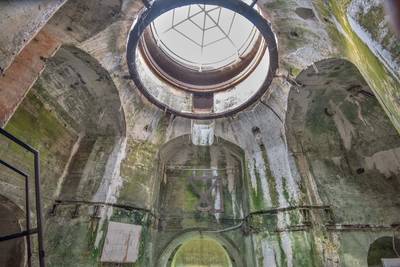
A view from the gun deck of the Moncrieff gun pit, with the "shaft" construction visible as a two-level system: the Gun Deck (Top), the Crew Floor (Bottom), Mechanism Traces. Coastal Fort "Reef", Kronstadt, Russia, September 27, 2025  Remnants of an engineering testing structure or "polygon" located on the shoreline near Fort Reef and Fort Shanetz. Kronstadt, Russia, September 27, 2025  A museum exhibit inside the historical Coastal Fort "Reef" The scene reconstructs a Soviet-era military office or command post (likely a clerk s or commander s office) located within one of the fort s fortified casemates. Kronstadt, Saint Petersburg, Russia, September 27, 2025  Armored cupola of an experimental observation post, built in 1891. This was part of the "Engineer Polygon" tests to see how well concrete structures combined with armor could withstand enemy fire. Coastal Fort "Reef", Kronstadt, Russia, September 27, 2025  Remains of the Engineer Department s Experimental Battery, also known as the "Engineer Polygon". These structures were bombarded to test the resistance of Portland cement. Coastal Fort "Reef", Kronstadt, Russia, September 27, 2025  Rangefinder (dalnomernyi) pavilion belonging to one of the coastal batteries of the Kronstadt fortress, situated near Fort Shanetz. Kronstadt, Russia, September 27, 2025  Large brick building of the Officer s Building (Officers Assembly) of the Fort Shanetz. Kronstadt, Russia, September 27, 2025 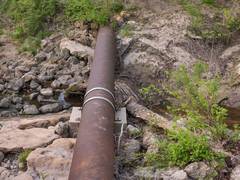 A large, heavily rusted metal pipe spanning horizontally across a ravine. The thick cylindrical pipe, completely oxidized from long-term exposure to the elements, serves as a stark piece of man-made infrastructure cutting directly through the natural landscape. Its dark, weathered surface stretches across the frame, contrasting sharply with the lighter earthy tones of the surrounding environment. In the near foreground, the engineering used to secure the pipeline is clearly visible. The heavy steel pipe rests securely on a square, poured-concrete abutment built directly into the creek bank. Two bright, unweathered metal retaining straps wrap over the top of the pipe, firmly bolted into the solid concrete base. These shiny galvanized brackets anchor the structure to the ground, designed to prevent the heavy cylinder from shifting under internal pressure or environmental stress. Lick Creek Park. College Station, Texas, March 25, 2026  Scattered, moss-covered remains of the pontoon bridge mechanism or its anchoring system. The massive granite boulders with embedded iron loops are likely anchors for a floating structure, or remnants of the pontoon system itself that was once used or stored near the Visconti Bridge. Before the stone Visconti Bridge was built in 1803, a floating bridge existed in this location. It is possible these are historical remnants from that era or parts of the hydraulic system used to manage the floating pontoons or secure boats near the dam. Pavlovsk, a suburb of Saint Petersburg, Russia, October 6, 2025  View of Fort Alexander (Plague) from Fort Constantine, Kronstadt. Saint Petersburg, Russia, June 21, 2011  Ruins of Fort Pavel I (Risbank), view from Fort Constantine, Kronstadt. Saint Petersburg, Russia, June 21, 2011  Remains of stone walls near Al Thugab Fort. North-west coast, Qatar, June 20, 2015  Fort Pavel I (Risbank) with Lomonosov in background, view from Fort Constantine, Kronstadt. Saint Petersburg, Russia, June 21, 2011  A moat and crumbling walls of Fort Macomb near Venetian Isles. Eastern New Orleans, Louisiana, November 23, 2006  Crumbling brick walls of Fort Pike on Road 90, Saint Tammany Parish. Louisiana, July 4, 2006  Washed out clay walls in Ain Mohamed Fort near Al Areesh Road north from Zubara. Northern Qatar, December 26, 2015  Ruined brick tower on the beach, which is the remains of a searchlight station (prozhektornaya stantsiya) belonging to Fort Shanetz. Kronstadt, Russia, September 27, 2025  Decorated ceiling of the Large Italian Skylight Hall in Hermitage Museum. Saint Petersburg, Russia, July 22, 2005  This broader aerial shot, taken from an aircraft heading north towards Helsinki, captures the expansive geography of Tallinn s coastline. The large landmass stretching into the sea on the left is the Kopli Peninsula. Once an industrial zone, it is now a rapidly developing area with trendy neighborhoods like Kalamaja (closer to the center) and burgeoning cultural hubs. The calm, blue waters of Tallinn Bay dominate the background, illustrating the city s intimate connection with the Baltic Sea. Further in the distance, beyond Kopli, one can see the tip of the Paljassaare Peninsula, known for its bird conservation area and beaches. The area in the foreground, characterized by a regular grid of streets and lower-rise buildings (many of them historic wooden houses), is the Kalamaja district. On the coastline to the right, the massive concrete hangars of the Seaplane Harbour museum are visible, a key maritime landmark. Near the Seaplane Harbour, the curved, defensive walls of the Patarei Sea Fortress (a former prison) stand on the water s edge, marking a grim but significant historical site. View from a window of an airplane from Tallinn to Helsinki, Estonia, October 17, 2025  Old city walls near Vosstaniya Street in Kronstadt. Saint Petersburg, Russia, July 24, 2012  Interior mosaics on walls of Church of Savior on Blood. Saint Petersburg, Russia, June 25, 2009  View of Fort Rif from a rocky beach in West Kotlin Nature Reserve in Kronstadt. Saint Petersburg, Russia, September 2, 2018  Christmas decoration on tall brick security walls of Huntsville prison "The Walls". Huntsville, Texas, December 20, 2009  Inside Fort Rodman, view from a hole in the wall. New Bedford, Massachusetts, April 18, 2004  Stained glass window of Naval Cathedral of Saint Nicholas in Kronstadt. Saint Petersburg, Russia, August 1, 2016  A yard inside Fort Rodman, view from a hole in the wall. New Bedford, Massachusetts, April 18, 2004  Remnants of ancient ingenious intertidal stone fish traps (rows of beachrock stone arranged in walls in semi-circular patterns) at low tide in Al Aaliya Island (Jazirat al Aliyah). Qatar, March 27, 2013  Large, overlapping brackets of Dyer s Mazegill mushrooms (Phaeolus schweinitzii) one meter above ground on a large pine in Dubki Park. Sestroretsk near Saint Petersburg, Russia, October 9, 2025  Memorial plaque of Texas Historical Commission in front of Walls Unit of TDCJ prison system. Huntsville, Texas, December 29, 2011  Accumulation of beetles on walls of old building in Ras Abrouq peninsula in west central coastal area, north from Zekreet. Qatar, November 14, 2014  Preview of the historical performance at Fort Ouiatenon near West Lafayette IN, August 29, 1999.  Preview of the historical performance at Fort Ouiatenon near West Lafayette IN, August 29, 1999.  Fort Peter. Kronstadt (part of Saint Petersburg), Russia, July 11, 2009  View of Kronstadt from Fort Constantine. Saint Petersburg, Russia, June 21, 2011  Floodlines on a window and walls of a house at 6510 Canal Boulevard. New Orleans, Louisiana, March 10, 2006  Powder bunker in Fort Constantine, Kronstadt. Saint Petersburg, Russia, June 21, 2011  Fort Alexander (Chumnoy). Kronstadt (part of Saint Petersburg), Russia, July 11, 2009  View of a lighthouse from Fort Constantine, Kronstadt. Saint Petersburg, Russia, June 21, 2011  Fort Menshikov (Menshikovskaya Batareya). Kronstadt (part of Saint Petersburg), Russia, July 11, 2009  Gun battery "Kane" (1897) in Fort Constantine, Kronstadt. Saint Petersburg, Russia, June 21, 2011  Fort of Kronshlot in Gulf of Finland. Kronstadt (part of Saint Petersburg), Russia, July 11, 2009  Stone stairs of Gril Platz in Fort Constantine, Kronstadt. Saint Petersburg, Russia, June 21, 2011  Navigation sign north from Fort of Kronshlot. Kronstadt (part of Saint Petersburg), Russia, July 11, 2009  Lighthouse south-west from Fort Menshikov. Kronstadt (part of Saint Petersburg), Russia, July 11, 2009  Lighthouse of Fort of Kronshlot in Gulf of Finland. Kronstadt (part of Saint Petersburg), Russia, July 11, 2009  Concrete structure of a sewage outlet on a beach in Fort Funston. San Francisco, California, March 16, 2024  Looking down Mu"u"rivahe Street (Mu"u"rivahe ta"nav), running alongside the medieval city wall of Tallinn. The dominant feature is the massive, 14th-century limestone defensive wall on the right. What stands out in this specific section (near Mu"u"rivahe 52) are the large concrete buttresses supporting the wall. Unlike the original medieval masonry, these are modern reinforcements added during the Soviet era (specifically in the late 1960s or 70s) to stabilize this section of the wall, which was in danger of collapsing. While effective, they are often noted for their distinct, brutalist contrast with the historic stonework. Further down the wall, you can see the red-tiled roof of the defensive walkway (chemin de ronde) and the towers (Hellemann Tower is nearby) that made Tallinn one of the best-fortified cities in Northern Europe. At the base of the wall, the original pointed arches (niches) are illuminated, highlighting the texture of the rough-hewn limestone. These niches historically housed workshops or stalls. The street name "Mu"u"rivahe" literally means "the gap between the walls," referring to the space between the main city wall and the lower defensive earthworks that once existed here. Tallinn, Estonia, October 16, 2025  "Merry Christmas to All" decoration on the 32 feet tall brick security wall surrounding "The Walls" prison (Huntsville TDCJ Unit), with a memorial historical plaque in foreground. Huntsville, Texas, December 18, 2008  A vibrant and slightly gritty scene in a courtyard or passage off Viru Street (Viru 13), revealing a hidden side of Tallinn s Old Town nightlife. The wall is covered in colorful, chaotic graffiti tags (e.g., "PASR," "OPG," "SRN"), contrasting with the historic surroundings. The abstract blue and white forms at the bottom right resemble stylized waves or bubbles. This heavy tagging is typical of the semi-hidden courtyards in this area that house alternative bars and clubs. Through the window on the right, you can see the warm interior of a bar. Bottles of alcohol are lined up on shelves, and the lighting suggests a cozy, active atmosphere inside. This juxtaposition--the rough, cold exterior wall versus the inviting, warm interior--encapsulates the "hidden bar" culture of Tallinn. While Viru Street itself is a main tourist artery known for flower stalls and souvenir shops, the courtyards behind the facades (like at Viru 13/15) often host rooftop bars like A"rkel or speakeasy-style venues. Tallinn, Estonia, October 16, 2025  Memorial plaque of Texas Historical Commission in front of 32 feet high and 2-3 feet thick brick security wall (1942) surrounding Walls Unit of TDCJ prison system. Huntsville, Texas, June 29, 2008  Walls of Flour Mill at Morskaya Naberezhnaya. Vyborg, Russia, September 14, 2013  Graffiti art on walls of Goving House at 11 Krepostnaya Street. Vyborg, Russia, September 10, 2016  Doha Fort (Al Koot Fort) near Souq Waqif (old market). Doha, Qatar, January 24, 2010  Roothole rosette mushrooms (Stereopsis vitellina) mushrooms extracted from peat walls of a burrow near a road under pines in Petyayarvi, north from Saint Petersburg, Russia, October 5, 2025  Doha Fort (Al Koot Fort) near Souq Waqif. Doha, Qatar, March 1, 2011  View in direction of Stanton s Reef and Rough Point from Cliff Walk at Sheep Point in Newport. Rhode Island, September 3, 2004  A quiet, atmospheric section of Pikk Street (near Pikk 5 and 7), one of the oldest and most important commercial streets in medieval Tallinn. Veta Fashion (Pikk 6/8): On the left, the brightly lit shop window belongs to Veta, a well-known Estonian brand specializing in knitwear and linen clothing. The building itself features a classic stucco fac,ade with large display windows that invite passersby to look in. On the right, the building with the blue-and-red wooden door (Pikk 5) is home to the Noku Klubi, a somewhat "secret" bohemian cultural club and restaurant located on the upper floor. The heavy, colorful door is a distinctive landmark for locals knowing where to find this hidden gem. Further up on the right, the red brick building with Gothic-style pointed arches stands out against the plastered facades, adding texture and historical depth to the streetscape. Tallinn, Estonia, October 16, 2025  A historical mural on a concrete column showing historical portraits of Arthur Esteves and M. Alcee Labat, with abandoned cars under I-10 ramp along North Claiborn Avenue near Esplanade Avenue in Treme. New Orleans, Louisiana, April 14, 2006  Azure blue walls and white columns of Grotto Pavilion sitting on the edge of Great Pond (Bolshoy Prud) in Catherine Park. Pushkin (former Tsarskoe Selo) near Saint Petersburg, Russia, October 10, 2025  Stone flowers on walls of a mausoleum in Novodevichye Cemetery at Moskovskiy Prospekt. Saint Petersburg, Russia, September 22, 2015  A striking architectural contrast on Sauna Street (Sauna ta"nav), near the intersection with Va"ike-Karja Street. On the left, a modern glass-and-steel building features large display windows and industrial-style staircases, illuminated by neon lights. This building is part of the Helios Hall complex (formerly the Helios Cinema), which has been repurposed as an event venue and art space. The transparent facade allows a view into the contemporary interior, contrasting sharply with the solid, historic walls of the Old Town. On the right, the corner of an older, plastered building (Sauna 12) is covered in colorful, abstract graffiti. This gritty, urban element acts as a foil to the clean lines and slick surfaces of the modern building opposite it, highlighting the eclectic mix of styles in this part of the city. Tallinn, Estonia, October 16, 2025  This is the interior of St. Nicholas Church (Niguliste kirik), now a museum of medieval art, looking towards the east end of the nave. The centerpiece is the magnificent High Altar retable (visible in the distance), a masterpiece of late medieval art created by the workshop of Lu"beck master Hermen Rode between 1478 and 1481. It is one of the largest and best-preserved altarpieces of its kind in Europe, measuring over six meters wide when fully open. The artwork depicts the lives of St. Nicholas and St. Victor, alongside more than thirty sculptures of saints. Coat-of-Arms Epitaphs: The white limestone walls of the nave are adorned with a unique collection of large, colorful coat-of-arms epitaphs (seen on the right wall). These were dedicated to wealthy local merchants and nobility from the 17th and 18th centuries, serving as memorials for those buried within the church. Estonia, October 16, 2025  Old granite walls behind Vyborg Castle. Vyborg, Russia, September 14, 2013  Mu"u"rivahe Street (Mu"u"rivahe ta"nav), specifically the section near the famous "Knit Market" wall. The name Mu"u"rivahe translates to "Between the Walls," referring to its historical location between the city s main defensive wall and a lower, secondary wall. This area is famous for the open-air market where local craftswomen sell traditional Estonian hand-knitted items like wool sweaters, mittens, and socks directly off the medieval stone wall. This specific spot (near Mu"u"rivahe 21) is close to the Viru Gate entrance to the Old Town and connects towards St. Catherine s Passage, another famous medieval walkway. Tallinn, Estonia, October 16, 2025  Interior of St. Peter and St. Paul s Cathedral (Peeter-Pauli katedraal), located at Vene 18. This is the main cathedral for the Roman Catholic Diocese of Tallinn and one of the few Catholic churches in a predominantly Protestant and secular country. The church was built between 1841 and 1844 on the walls of the former refectory (dining hall) of the medieval St. Catherine s Monastery. The Neoclassical fac,ade and twin towers were added later in the 1920s by architects Erich Jacoby and Franz de Vries. The space is characterized by its high vaulted ceilings and light, airy atmosphere. Tallinn, Estonia, October 16, 2025  Limestone walls of the canyon of Ein Bokek, near Dead Sea. The Middle East, September 18, 2001  Large Italian Skylight Hall in Hermitage museum. Saint Petersburg, Russia, June 29, 2003  Large Italian Skylight Hall in Hermitage Museum. Saint Petersburg, Russia, December 16, 2005  Hall on the Island in Catherine Park, view from Ferry Crossing. It was originally built in the late 1740s by the architect Savva Chevakinsky in the Baroque style, with decorations based on sketches by Rastrelli. In 1794, under Catherine the Great, the architect Giacomo Quarenghi completely rebuilt it in the Classical style. He simplified the decor, giving it the restrained, elegant appearance seen today--white walls, large arched windows, and a modest green roof. Pushkin (former Tsarskoe Selo) near Saint Petersburg, Russia, October 10, 2025  An old transformer substation (or similar utility building) in Lanskoy Garden on Sampsonievsky Prospekt near Lanskaya train Station. Its brick walls have effectively become an unofficial community billboard, covered in layers of concert posters (e.g., for the singer Linda). Saint Petersburg, Russia, October 9, 2025  City walls. Novgorod, Russia, August 1, 2001  View of a late-Soviet brick residential quarter (kirpichnaya khrushchevka) deeply integrated with the mature nature of the Vyborgsky district, captured at the beautiful but fleeting peak of autumn. View from this window providing a glimpse into Soviet-era urban planning, specifically the residential design of the 1960s. The beige brick buildings visible in the frame are classic examples of "Khrushchevka" (Series 1-528). Unlike the cheaper concrete panel blocks (panelki), these are constructed from silicate brick, which was considered a "premium" material for mass housing at the time. They are easily identified by their 5-story height, hipped roofs (often replaced with metal sheeting), and specific balcony arrangements. Saint Petersburg, Russia, October 11, 2025  Stained-glass window in Hermitage Museum. Saint Petersburg, Russia, January 2, 2016  Historical concrete pavilion remained from a construction and engineering exhibition in 1908 on Kamennyi Ostrov. Saint Petersburg, Russia, June 16, 2011  Flattened, spoon-shaped or fan-like fruit bodies with a bright egg-yellow to creamy-yellow color of Roothole rosette mushrooms (Stereopsis vitellina) mushrooms extracted from peat walls of a burrow near a road under pines in Petyayarvi, north from Saint Petersburg, Russia, October 5, 2025  This view across the Friendship Bridge offers a stark look at the Ivangorod Fortress in Russia, directly contrasting with previous Estonian views. The most striking element in this image is the heavy modern fortification in the foreground. The bridge, which once facilitated vehicle traffic, is now blocked by rows of razor wire and concrete "dragon s teeth" anti-tank obstacles. These defensive measures, installed by Estonia, reflect the heightened geopolitical tension and the bridge s current status as a restricted crossing (open only to pedestrians as of 2024-2025). Dominating the background is the formidable Ivangorod Fortress, established in 1492 by Ivan III to counter the Teutonic Order on the opposite bank. A large Russian flag flies prominently atop one of the towers, serving as a deliberate counterpart to the Estonian and NATO flags visible from the other side of the river. Estonia, October 16, 2025  Close-up of flattened, spoon-shaped or fan-like fruit bodies with a bright egg-yellow to creamy-yellow color of Roothole rosette mushrooms (Stereopsis vitellina) mushrooms extracted from peat walls of a burrow near a road under pines in Petyayarvi, north from Saint Petersburg, Russia, October 5, 2025 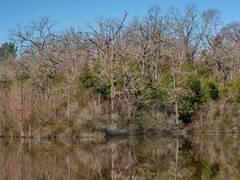 Oaks on Lake Trail in Fort Boggy State Park. Leon County, Texas, February 1, 2025 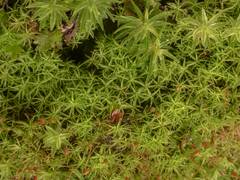 Various mosses on Lake Trail in Fort Boggy State Park. Leon County, Texas, March 16, 2025 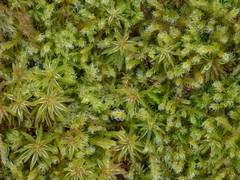 Various mosses on Lake Trail in Fort Boggy State Park. Leon County, Texas, February 1, 2025 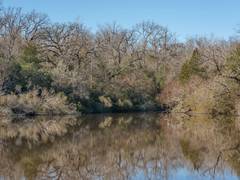 Forest on Lake Trail in Fort Boggy State Park. Leon County, Texas, February 1, 2025 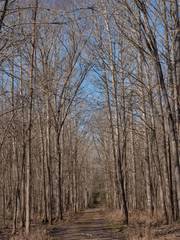 Trees on Tunnel Trail in Fort Boggy State Park. Leon County, Texas, February 1, 2025  Walls of Koporye Fortress. Leningrad Region, Russia, February 9, 2013  Fortification walls on Vyborgskaya Street. Vyborg, Russia, June 21, 2014  Old stone walls in old fishing village (ghost town) of Al Ghariyah on north-eastern coast, Ash Shamal area. Qatar, September 12, 2015  Gothic structure on stained-glass window in Hermitage Museum. Saint Petersburg, Russia, January 2, 2016  Atrichum moss on Lake Trail in Fort Boggy State Park. Leon County, Texas, March 16, 2025 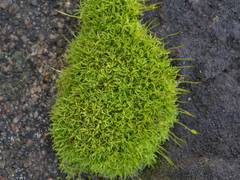 Cushion of some moss on Lake Trail in Fort Boggy State Park. Leon County, Texas, February 1, 2025 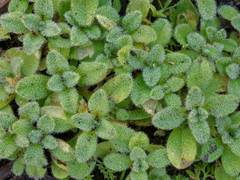 Some hairy seedlings on Campbell Trail in Fort Boggy State Park. Leon County, Texas, February 1, 2025  Walls of Ivan Gorod Fortress. Leningrad Region, Russia, February 9, 2013  Towers and walls of Koporye Fortress. Leningrad Region, Russia, July 17, 2005  Walls of Flour Mill at Morskaya Naberezhnaya. Vyborg, Russia, June 21, 2014  Walls of Ivan Gorod Fortress. Leningrad Region, Russia, February 9, 2013  Walls of Koporye Fortress in snow. Leningrad Region, Russia, February 9, 2013  Brick walls of Koporye Fortress. Leningrad Region, Russia, February 9, 2013  Interior of Naval Cathedral of Saint Nicholas in Kronstadt. Saint Petersburg, Russia, September 8, 2017 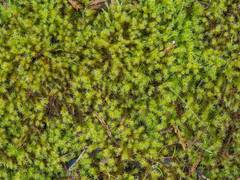 Some short green moss on Lake Trail in Fort Boggy State Park. Leon County, Texas, February 8, 2025 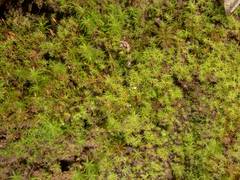 Mosses on a creel slope on Lake Trail in Fort Boggy State Park. Leon County, Texas, March 16, 2025 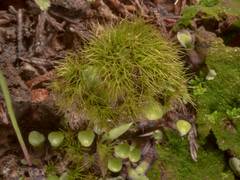 Various mosses on a slope of a creek on Lake Trail in Fort Boggy State Park. Leon County, Texas, March 16, 2025 |