 |
| |||||||||||||||||

| ||||||||||||||||||


| Similar |   |
  |
  |
  |
  |
| |||||||||||||||||||||||||||||
| |||||||||||||||||||||||||||||
| 1996 1997 1998 1999 2000 2001 2002 2003 2004 2005 2006 2007 2008 2009 2010 2011 2012 2013 2014 2015 2016 2017 2018 2019 2020 2021 2022 2023 2024 2025 2026 | |||||||||||||||||||||||||||||
| New version Slide Show Most Popular Full List Statistics Technical Details Home Page | |||||||||||||||||||||||||||||
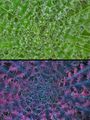
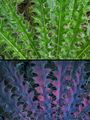
This photograph presents a striking comparison between two sections of a bull thistle plant: one exposed to regular daylight and the other illuminated by a 365 nm ultraviolet (UV-A) blacklight on a sewage line right-of-way in Lick Creek Park, College Station, Texas. **Regular Daylight Section** The top section of the image features a vibrant green color, with leaves that appear healthy and robust. The plant's morphology is characterized by a rosette shape, with leaves arranged in a circular pattern around the stem. Each leaf exhibits serrated margins, giving it a distinctive appearance. **UV-A Blacklight Illuminated Section** In contrast, the bottom section of the image reveals a dramatic transformation when exposed to UV-A radiation. The plant's leaves have turned a deep purple color, with white hairs visible on their surfaces. This change in coloration is likely due to the activation of pigments that are only visible under ultraviolet light. The rosette shape remains intact, but the overall appearance of the plant has become more intense and vibrant. **Comparison and Conclusion** The comparison between the two sections highlights the unique properties of bull thistle plants when exposed to different types of light. While regular daylight appears to nourish the plant's growth, UV-A radiation reveals a hidden world of color and texture that is not visible to the naked eye. This image provides a fascinating glimpse into the intricate interactions between plants and their environment, showcasing the complex relationships between light, pigments, and morphology in nature. – AI vision |
Sección central de la roseta de las hojas basales del cardo tormentoso (Cirsium horridulum) cuando se expone a la luz diurna regular y también cuando se ilumina con una lámpara negra de ultravioleta de 365 nm (UV-A) en un camino derecho de alcantarillado en Lick Creek Park. College Station, Texas, noviembre 15, 2024. Esta fotografía presenta una comparación sorprendente entre dos secciones de una planta de cardo tormentoso: una expuesta a la luz diurna regular y la otra iluminada con una lámpara negra ultravioleta de 365 nm (UV-A) en un camino derecho de alcantarillado en Lick Creek Park, College Station, Texas. **Sección expuesta a la luz diurna regular** La sección superior de la imagen presenta un color verde vibrante, con hojas que parecen sanas y robustas. La morfología de la planta se caracteriza por una forma de roseta, con hojas dispuestas en un patrón circular alrededor del tallo. Cada hoja presenta márgenes serrados, lo que le da un aspecto distintivo. **Sección iluminada con luz negra UV-A** Por el contrario, la sección inferior de la imagen revela una transformación dramática cuando se expone a la radiación UV-A. Las hojas de la planta han adquirido un color púrpura oscuro, con pelos blancos visibles en sus superficies. Este cambio de coloración es probable que se deba a la activación de pigmentos que solo son visibles bajo luz ultravioleta. La forma de roseta sigue intacta, pero el aspecto general de la planta ha adquirido un tono más intenso y vibrante. **Comparación y conclusión** La comparación entre las dos secciones destaca las propiedades únicas de las plantas del cardo tormentoso cuando se exponen a diferentes tipos de luz. Mientras que la luz diurna regular parece nutrir el crecimiento de las plantas, la radiación UV-A revela un mundo oculto de color y textura que no es visible a simple vista. Esta imagen proporciona una fascinante visión de las interacciones complejas entre las plantas y su entorno, mostrando las relaciones complejas entre luz, pigmentos y morfología en la naturaleza. – Spanish translation |
Keyword variants
high resolution online digital collection
Lick Creek Park images
Berlin on the Brazos
Rock Prairie Rd
Lone Star State
Greens Prairie Road
United States
picture gallery
photo album
nature trails
Nature Park
documentary photographs
daily pics
conservative town
Brazos County
wildlife
TX
travelogue
snapshots
sightseeing
photowalks
photoblog
graphic
fotografias
foto
Bryan
America
Aggieland