 |
| |||||||||||||||||

| ||||||||||||||||||


| Similar |   |
  |
  |
  |
  |
| |||||||||||||||||||||||||||||
| |||||||||||||||||||||||||||||
| 1996 1997 1998 1999 2000 2001 2002 2003 2004 2005 2006 2007 2008 2009 2010 2011 2012 2013 2014 2015 2016 2017 2018 2019 2020 2021 2022 2023 2024 2025 2026 | |||||||||||||||||||||||||||||
| New version Slide Show Most Popular Full List Statistics Technical Details Home Page | |||||||||||||||||||||||||||||
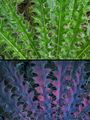
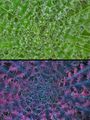
The image presents a striking comparison between the appearance of bull thistle leaves under regular daylight and when illuminated by a 365 nm ultraviolet (UV-A) blacklight. The top portion of the image showcases the leaves as they appear in natural daylight, while the bottom half reveals their vibrant transformation under UV-A light. **Daylight Appearance** * **Color**: The leaves are predominantly green with white spines or prickles along their edges. **UV-A Illumination** * **Glowing Effect**: Under UV-A illumination, the leaves exhibit a glowing effect, particularly around the veins and areas with more intense hair growth. **Overall Impression** The image effectively highlights the unique characteristics of bull thistle leaves when exposed to UV-A light. The transformation from a dull green appearance under daylight to a vibrant, glowing display under UV-A illumination showcases the plant's ability to absorb and reflect specific wavelengths of light. This phenomenon is likely due to the presence of pigments or other compounds within the plant that respond to ultraviolet radiation. – AI vision |
Las hojas basales del cardo de toros (Cirsium horridulum) cuando se exponen a la luz normal diurna, así como también cuando son iluminadas por una luz negra ultravioleta (UV-A) de 365 nm en un camino derecho de alcantarillado en Lick Creek Park. College Station, Texas, noviembre 15, 2024. La imagen presenta una impresionante comparación entre la apariencia de las hojas del cardo de toros bajo luz diurna normal y cuando son iluminadas por una luz negra ultravioleta (UV-A) de 365 nm. La parte superior de la imagen muestra las hojas tal como aparecen en la luz natural, mientras que la mitad inferior revela su transformación vibrante bajo luz UV-A. **Apariencia diurna** * **Color**: Las hojas son predominantemente verdes con espinas o ápices blancos a lo largo de sus bordes. * **Textura**: Tienen una textura ligeramente peluda debido a los pelillos finos en su superficie. **Iluminación UV-A** * **Efecto de iluminación**: Bajo iluminación UV-A, las hojas exhiben un efecto de iluminación, particularmente alrededor de las venas y áreas con mayor crecimiento de pelillos. * **Cambio de color**: El color de las hojas cambia de verde a rosado-rojo, acentuando el efecto de iluminación. * **Mayor visibilidad**: Este cambio en el color mejora la visibilidad de los pelillos finos en la superficie de las hojas. **Impresión general** La imagen destaca eficazmente las características únicas de las hojas del cardo de toros cuando se exponen a la luz UV-A. La transformación de una apariencia verde sosa bajo luz diurna a una exhibición vibrante y brillante bajo iluminación UV-A muestra la capacidad de la planta para absorber y reflejar longitudes de onda específicas de luz. Este fenómeno es probablemente debido a la presencia de pigmentos u otros compuestos dentro de la planta que responden a la radiación ultravioleta. – Spanish translation |
Keyword variants
high resolution online digital collection
Lick Creek Park image
Berlin on the Brazos
Rock Prairie Rd
Lone Star State
Greens Prairie Road
United States
picture gallery
photo album
nature trails
Nature Park
documentary photographs
daily pics
conservative town
Brazos County
wildlife
TX
travelogue
snapshots
sightseeing
photowalks
photoblog
graphic
fotografias
foto
Bryan
America
Aggieland