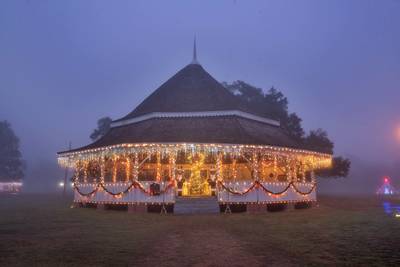
Virginia Field Park, with gazebo-style octogonal two-tiered bandstand (1895, Karen Renee Wiese Memorial Pavilion) in the center. Calvert, Texas, December 22, 2011  Virginia Field Park, with gazebo-style octogonal two-tiered bandstand (1895, Karen Renee Wiese Memorial Pavilion) in the center. Calvert, Texas, May 28, 2007  Gazebo-style octogonal two-tiered bandstand (1895) (Karen Renee Wiese Memorial Pavilion) in the center of Virginia Field Park. Calvert, Texas, January 19, 2008  Gazebo-style octogonal two-tiered bandstand (1895) (Karen Renee Wiese Memorial Pavilion) in the center of Virginia Field Park. Calvert, Texas, January 28, 2007  Gazebo-style octogonal bandstand (1895) (Karen Renee Wiese Memorial Pavilion) in Virginia Field Park. Calvert, Texas, December 27, 2011  Gazebo-style octogonal bandstand (1895) (Karen Renee Wiese Memorial Pavilion) in the center of Virginia Field Park. Calvert, Texas, December 13, 2009  Gazebo-style octogonal bandstand (1895) (Karen Renee Wiese Memorial Pavilion) in the center of Virginia Field Park. Calvert, Texas, December 27, 2008  Gazebo-style octogonal bandstand (1895) (Karen Renee Wiese Memorial Pavilion) in Virginia Field Park at early morning. Calvert, Texas, December 22, 2010  Gazebo-style octogonal bandstand (1895) (Karen Renee Wiese Memorial Pavilion) in the center of Virginia Field Park. Calvert, Texas, January 27, 2013  Historic octagonal pavilion (1895) located in Virginia Field Park. The pavilion is festively lit with strands of Christmas lights and "icicle" lights, which is a local tradition during the holiday season. Calvert, Texas, December 13, 2025 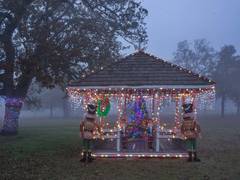 A smaller accompanying gazebo (1895) near the octagonal pavilion in Virginia Field Park. Calvert, Texas, December 13, 2025 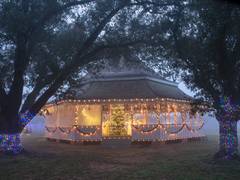 Oaks and a historic octagonal pavilion in Virginia Field Park. Calvert, Texas, December 13, 2025  Live oak and a historic octagonal pavilion with Christmas lights in Virginia Field Park. Calvert, Texas, December 13, 2025  Christmas decorations of the octagonal pavilion in Virginia Field Park. Calvert, Texas, December 13, 2025  Katalnaya Gorka Pavilion (Sliding Hill Pavilion), a masterpiece of 18th-century architecture located in the Upper Park of Oranienbaum. Designed by Antonio Rinaldi, this 33-meter-high pavilion is a striking blend of Baroque and early Classicism. Its festive, light-blue and white facade, tiered "wedding-cake" shape, and crowning bell-shaped dome make it resemble a lighthouse rising above the park s trees. Oranienbaum palace-and-park ensemble in Lomonosov (a suburb of St. Petersburg), Russia, October 13, 2025  Gazebo-style octogonal pavilion in Virginia Field Park. Calvert, Texas, December 27, 2011  Stone Hall Pavilion (Kammenoe Zalo) in Oranienbaum Park. It is a light pink, two-story stone pavilion designed by architect Antonio Rinaldi (built mid-18th century) for Grand Duke Peter Fedorovich. Originally used for concerts, masquerades, and dances, it later served as a Lutheran church. Oranienbaum palace-and-park ensemble in Lomonosov (a suburb of St. Petersburg), Russia, October 13, 2025  Chinese Gazebo (often called the Creaking Pagoda or Skripuchaya Besedka) which is one of the most eccentric and picturesque structures in Catherine Park. Built between 1778 and 1786, this pavilion was designed by Yury Felten (Georg Friedrich Veldten) at the height of the 18th-century craze for Chinoiserie (Chinese-style art). The pavilion gets its popular nickname from the metal weather vane on its roof. Shaped like a Chinese banner, it was intentionally designed to creak loudly in the wind. Originally, such pavilions served as tea houses or resting spots for the Empress and her court during their walks. Pushkin (former Tsarskoe Selo) near Saint Petersburg, Russia, October 10, 2025  Evening Hall (Vecherniy Zal) in Catherine Park. It was built between 1796 and 1810 under the supervision of architect P.V. Neyelov (and possibly Luigi Rusca). This pavilion was intended for evening gatherings, small concerts, and balls. The building is a simple, rectangular Classical structure with a low dome and large arched windows Pushkin (former Tsarskoe Selo) near Saint Petersburg, Russia, October 10, 2025  Distinctive storefront with the purple and pink trim of Garden Gate Antiques at 517 South Main Street. Calvert, Texas, December 13, 2025  Pyramid Pavilion, located in a quiet, shady corner of Catherine Park in Tsarskoe Selo (Pushkin). It was originally built in 1770-1772 by the architect Vasily Neyelov and later reconstructed by Charles Cameron in 1782-1783. The pavilion was designed to resemble an ancient Egyptian mausoleum, reflecting the Romantic era s fascination with antiquity and melancholy ruins. It is constructed of brick and faced with trimmed granite. Buried behind the pyramid are three of the Empress s favorite Italian greyhounds: Tom Anderson, Zemira, and Duchesse. Saint Petersburg, Russia, October 10, 2025  Krestovy Bridge (Cross Bridge) located in Alexander Park in the town of Pushkin (formerly Tsarskoe Selo), near Saint Petersburg. It has Chinoiserie (Chinese-style) architecture, popular in the 18th century. A pavilion rests on four joined arches over the canal, creating a cross shape. It features glazed bricks (crimson, yellow, blue) and a curved "fish scale" roof. Built in 1779 by the Neyelovs for Catherine the Great, it is a key landmark of the park s "New Garden" area. Russia, October 10, 2025  Turkish Bath, a picturesque pavilion situated on a small peninsula in the Great Pond in Catherine Park. Commissioned by Emperor Nicholas I, this was the last structure built in the imperial park, completed between 1850 and 1852. It was designed by Ippolito Monighetti, who used the appearance of a Turkish mosque as his inspiration. The building features a central gilded dome, a tall minaret crowned with a crescent, and intricate relief ornaments on the white facade. The pavilion serves as a victory monument to the Russo-Turkish War of 1828-1829. Pushkin (former Tsarskoe Selo) near Saint Petersburg, Russia, October 10, 2025  The central alley leading to the Arsenal Pavilion, a red-brick neo-Gothic structure designed by Adam Menelaws. Completed in 1834, the Arsenal resembles a medieval castle with crenellated towers and massive arched windows. It was originally built to house Nicholas I s vast collection of medieval arms and armor. The straight alley is a remnant of the formal layout from the earlier "Monbijou" pavilion that stood here, now framed by the mature trees of the surrounding landscape park. After severe damage in WWII, the building was restored and reopened in 2016 as a museum displaying imperial weaponry. Aleksandrovsky (Alexander) Park in Pushkin (former Tsarskoe Selo) near Saint Petersburg, Russia, October 10, 2025  Christmas lights in Virginia Field Park. Calvert, Texas, December 13, 2025  Christmas decorations in Virginia Field Park in fog. Calvert, Texas, December 13, 2025  Christmas decorations in Virginia Field Park. Calvert, Texas, December 13, 2025  Christmas lights on oaks in Virginia Field Park. Calvert, Texas, December 13, 2025  Graves belonging to the Foster and Phernetton families (specifically referencing Mattie Phernetton) in the Calvert City Cemetery. These graves are located in the older section of the cemetery, evidenced by the Victorian symbolism and the weathering of the white marble/limestone markers. Calvert, Texas, December 13, 2025  Upper Bath Pavilion reflected perfectly in the Mirror Pond in Catherine Park. Built in 1777-1779 by the architects Ilya and Vasily Neelov, this pavilion is a fine example of Early Classicism. The building features a modest yet elegant yellow facade with a central arched entrance and circular windows (oculi) adorned with garlands. Pushkin (former Tsarskoe Selo) near Saint Petersburg, Russia, October 10, 2025  Hermitage Pavilion in Catherine Park, designed by the Italian court architect Francesco Bartolomeo Rastrelli in Elizabethan Baroque style. Pushkin (former Tsarskoe Selo) near Saint Petersburg, Russia, October 10, 2025  Joseph A. Foster House at 307 East Texas Street, a corner of Beech Street. It was built as a Gothic Revival structure in 1878, reflecting the Victorian tastes of the era. The facade is symmetrical with a central entrance, characteristic of the Neoclassical style. The house was severely damaged by a tornado spawned by the 1900 Galveston Hurricane. Following this disaster, it was extensively remodeled into the Neoclassical (Greek Revival) style. It has been the subject of historic preservation efforts, with significant renovation projects reported around 2018. Calvert, Texas, December 13, 2025  St. Nicholas Church (Niguliste kirik), located at Niguliste 3 in Tallinn s Old Town. Although originally built as a fortress church in the 13th century dedicated to Saint Nicholas (patron of sailors and merchants), it is no longer a functioning place of worship. Today, it houses the Niguliste Museum, a branch of the Art Museum of Estonia, dedicated to medieval ecclesiastical art. The church was founded by Westphalian merchants in the 1230s and was one of the wealthiest in the city. It was heavily damaged during the Soviet bombing of Tallinn in March 1944, losing its roof and most of its interior, but was meticulously restored in the following decades. The tower, rebuilt with a Baroque spire, now features a glass elevator and a viewing platform offering panoramic views of the city. The church sits on a rise just south of the Town Hall Square, surrounded by a green area that was once a cemetery. The street in the foreground is Niguliste Street, leading up from the lower town. Tallinn, Estonia, October 16, 2025  Princess Lieven s Island, a small artificial island located in the center of the Rose Pavilion Ponds in Pavlovsk Park. Pavlovsk, a suburb of Saint Petersburg, Russia, October 15, 2025  Monument to Alexander Lanskoy (often referred to as the Pamyatnik Lanskomu or simply the marble pedestal/urn), located on the Rose Field (Rozovoe Pole) in Catherine Park. It was erected by Catherine the Great in memory of her young favorite, Alexander Lanskoy, who died suddenly in 1784 at the age of 26. The monument is an example of Neoclassical funerary art, likely designed by Antonio Rinaldi or possibly Giacomo Quarenghi. It features a high pedestal made of grey and pink marble, adorned with bas-reliefs and inscriptions (though these are often weathered). Pushkin (former Tsarskoe Selo) near Saint Petersburg, Russia, October 10, 2025  Virginia Field Park, with gazebo-style octogonal pavillion. Calvert, Texas, December 22, 2011  Architectural details of the Temple of Friendship (Khram Druzhby), a rotunda pavilion on the banks of the Slavyanka River in Pavlovsk Park. Pavlovsk, a suburb of Saint Petersburg, Russia, October 6, 2025  Ruins of the former "Okhotnichy Domik" (Hunting Lodge) restaurant, built in 1958 in the Stalinist Neoclassical style. The structure, located near Prospekt Engelsa, features a distinctive rotunda with columns and a now-exposed skeletal dome, having fallen into disrepair after a fire in 2010. The ruins are now heavily vandalized with graffiti and overgrown with vegetation, standing as a decaying relic of Soviet-era recreational architecture within the park. Udelnyi Park, St. Petersburg, Russia, October 4, 2025  Princess Lieven Column in Pavlovsk Park. The column is dedicated to Princess Charlotte Lieven, the beloved governess of Emperor Paul I s children. It stands on the Parade Field (Russian: :041f:0430:0440:0430:0434:043d:043e:0435 :043f:043e:043b:0435:feff), specifically on the peninsula between the Rose Pavilion Ponds. Originally, this column was crowned with a gilded metal ball (sphere), which gave it a more finished look. Pavlovsk, a suburb of Saint Petersburg, Russia, October 15, 2025  Blending of religious and patriotic symbolism in the "Alley of Heroes". The foreground monument features a poignant epitaph addressing the deceased ("And you stand before our eyes, Alive... We keep you in our hearts") alongside an elaborate engraving of a soldier ascending a staircase toward a Christ-like figure, framing death as a spiritual journey. In the background, a distinctive broken-heart monument depicts a split image of a bridge at night surrounded by flags from various military branches, including the VDV and Russian Naval Infantry. Cemetery of the Victims of January 9, St. Petersburg, Russia, October 4, 2025  A quiet, atmospheric section of Pikk Street (near Pikk 5 and 7), one of the oldest and most important commercial streets in medieval Tallinn. Veta Fashion (Pikk 6/8): On the left, the brightly lit shop window belongs to Veta, a well-known Estonian brand specializing in knitwear and linen clothing. The building itself features a classic stucco fac,ade with large display windows that invite passersby to look in. On the right, the building with the blue-and-red wooden door (Pikk 5) is home to the Noku Klubi, a somewhat "secret" bohemian cultural club and restaurant located on the upper floor. The heavy, colorful door is a distinctive landmark for locals knowing where to find this hidden gem. Further up on the right, the red brick building with Gothic-style pointed arches stands out against the plastered facades, adding texture and historical depth to the streetscape. Tallinn, Estonia, October 16, 2025  Eagle Pavilion (Pavilion Orla) in Gatchina Park. Gatchina, a suburb of Saint Petersburg, Russia, June 20, 2009  "Draped Column" in Calvert Cemetery. The monument features a white marble column that appears to be "broken" or unfinished at the top, draped with a sculpted funeral cloth (shroud) with tassels. Calvert, Texas, December 13, 2025  Historic Old First National Bank building (1887), former CocoaModa, a high-end chocolate shop and bakery run by chef Ken Wilkinson, and now Vintage Treasures, an antique and collectibles shop, located at 518 South Main Street. Calvert, Texas, December 13, 2025  Example of Art Nouveau architecture in Tallinn, located at Pikk 18. It was designed by the renowned Baltic German architect Jacques Rosenbaum and completed in 1910. The design is celebrated for its flamboyant and fantastical style, which stands in stark contrast to the surrounding medieval architecture. The building is often referred to as the Draakoni Gallery (Dragon Gallery) because of the two large, sculpted dragons flanking the main ground-floor window. These sculptures were created by the famous Riga sculptor August Volz. The fac,ade is uniquely decorated with Egyptian-inspired themes, including reliefs of sphinxes and pharaonic figures at the top of the pilasters, adding to its exotic and eclectic appearance. The building features a distinctive curved corner tower with a slender spire, oval windows, and intricate floral ornaments typical of the late Art Nouveau period. Tallinn, Estonia, October 16, 2025  This street scene is located on Pikk Street, just north of the Pikk Jalg gate, looking back towards the city center. The baroque spire visible in the distance belongs to St. Nicholas Church (Niguliste kirik). Originally built in the 13th century and dedicated to the patron saint of merchants and seafarers, it is one of the city s most defining landmarks. The tower now features a glass elevator and viewing platform offering 360-degree views of the Old Town. The building at the corner (implied by the location) is part of the historic Kolmjalg ("Tripod") complex, a notable architectural feature at the junction of Pikk and Voorimehe streets, known for its medieval origins. Estonia, October 16, 2025  Tragic graves of the Couter family, likely victims of the devastating 1873 Yellow Fever Epidemic, in the Calvert City Cemetery. George Couter (Left Stone): The headstone is inscribed "In Memory of GEO. COUTER". Dates: Born Dec. 11, 1839 (or 1830) - Died Oct. 16, 1873. Context: He died just days before his wife, a common occurrence during the yellow fever outbreak that claimed hundreds of lives in Calvert between August and November of 1873. Mary Reese Couter (Right Stone): The stone reads "MARY REESE, Wife of G. COUTER". Dates: Born June 20, 1850 - Died Oct. 21, 1873. Tragedy: She died only 5 days after her husband. She was just 23 years old. The proximity of their deaths highlights the swift and deadly impact of the epidemic on local families. Visible in the background is a large, elaborate monument featuring a seated woman (mourner) with her head bowed in grief. Calvert, Texas, December 13, 2025  Gothic Gate (Goticheskie Vorota) in the landscape section of Catherine Park. Erected in 1778, the gate was designed by the architect Yury Felten (Georg Friedrich Veldten). The design mimics a Gothic cathedral portal, featuring slender columns that branch into pointed arches with intricate "lace-like" tracery. Pushkin (former Tsarskoe Selo) near Saint Petersburg, Russia, October 10, 2025  Mandel W. Marx (1880-1947) monument in Calvert Jewish Cemetery at FM 1644. The Marx family were key figures in the local Jewish community, which was once the largest between Houston and Dallas. Mandel was the son of Nathan Marx (1842-1905), one of the earliest Jewish settlers in Calvert who arrived in the 1870s and helped establish the town as a cotton center. Calvert, Texas, December 13, 2025  Red Cascade or Turkish Cascade in Catherine Park. The Red Cascade is a dam that regulates the water level between the Upper Ponds and the Great Pond. The two "towers" flanking the crossing are designed in the Gothic style, featuring red brick walls with white limestone details, pointed arches, and niche windows. It was built in the 1780s by the engineer Ivan Gerard, likely based on designs by the architect Vasily Neelov. Pushkin (former Tsarskoe Selo) near Saint Petersburg, Russia, October 10, 2025  Jones House, also widely known as the Parish House Bed & Breakfast, at 609 East Gregg Street, corner of Pin Oak Street. Built: 1897.:200b Style: It is a prime example of Queen Anne Victorian architecture, featuring: Asymmetry: A complex roofline with multiple gables. Turret: A prominent corner tower (turret) with a steep, bell-shaped roof. Porch: A wrap-around veranda with intricate spindlework and turned posts. Colors: Historically painted in "painted lady" schemes, often featuring green, white, and red accents. Calvert, Texas, December 13, 2025  A distinctive Stalinist Neoclassical residential building located at Bolshoy Sampsonievsky Avenue, 108, from a platform of Lanskaya railway station. Saint Petersburg, Russia, September 26, 2025  A white vintage stove in a distinctive blue building of Company B, a shop specializing in antiques, vintage-inspired gifts, and home decor at 506 South Main Street. Calvert, Texas, December 13, 2025  Deer Bridge in Pavlovsk Park. It gets its name from four zinc sculptures of lying deer that originally adorned the abutments. These statues mysteriously disappeared in the 1920s. Replicas were finally reinstalled in recent years to restore the bridge s historic appearance. Pavlovsk, a suburb of Saint Petersburg, Russia, October 15, 2025  One of the Small Chinese Bridges (Small Iron Bridges) crossing the Krestovy Canal. Originally wooden (1781), they were replaced with cast iron versions forged at the Sestroretsk Arms Factory in 1786. Designed by Charles Cameron, who also planned the nearby Chinese Village. The bridge features intricate iron lattice railings and is framed by distinctive porticoes formed of paired columns with "Chinese-style" curved sheet-iron roofs. The columns are painted to mimic colored marble, and the structure was fully restored in the 21st century. Aleksandrovsky (Alexander) Park in Pushkin (former Tsarskoe Selo) near Saint Petersburg, Russia, October 10, 2025  Evening view that provides a dramatic, upward-looking perspective of St. Olaf s Church (Oleviste kirik) from the street level (near Lai 48), emphasizing the towering scale of its west facade. The image is dominated by the massive limestone tower of St. Olaf s. The perspective highlights the transition from the square base to the octagonal upper stages, a typical feature of Gothic architecture in the Hanseatic region. The long, narrow window with its pointed arch (lancet window) is a defining Gothic element, allowing light into the nave. To the right, you can see the upper stories of the adjacent building (likely Lai 48 or 50). Its simple, plastered facade and regularly spaced windows provide a domestic scale that contrasts with the monumental church. The distinctive rain gutter (downspout) on the left foreground acts as a framing element, drawing the eye upward. This view underscores why St. Olaf s was once the tallest building in the world (1549-1625). The sheer verticality visible here was originally intended to serve as a landmark for trading ships approaching Tallinn s harbor. Tallinn, Estonia, October 16, 2025  Vene Street (Vene ta"nav), one of the most historic and culturally significant streets in Tallinn s Old Town. The creamy yellow building on the right (Vene 17) is the main branch of the Tallinn City Museum (Tallinna Linnamuuseum). It is housed in a medieval merchant s home that dates back to the 14th century, offering visitors a deep dive into the city s history from prehistory to the 20th century. The name Vene means "Russian" in Estonian. The street was historically the center of the Russian merchant community and housed the trade yards and churches of Russian traders, dating back to the 12th century. The streetscape here is an example of Tallinn s Hanseatic architecture. The museum building itself was formed by combining a Gothic merchant house with two granaries, creating the structure seen today. One can also see the distinctive "hoist beam" and cargo hatch on the facade, used for lifting goods into storage. Tallinn, Estonia, October 16, 2025  A Kneeling Angel statue on the grave of Mary Drennan by Aristide Maillol (1861-1944)(?) in the Calvert City Cemetery. Mary Drennan (November 20, 1882 - January 8, 1901) was the daughter of John Hill Drennan (1839-1921) and Mary Agnes Garrett Drennan (1846-1929), prominent residents buried nearby in the same family plot. The plot also contains other elaborate statuary, including a larger standing angel leaning against a cross (marking the grave of her sister, Adelaide Drennan Westall, who also died young in 1898). Calvert, Texas, December 13, 2025  Grotto Pavilion and Great Pond (Bolshoy Prud) in Catherine Park. Pushkin (former Tsarskoe Selo) near Saint Petersburg, Russia, October 10, 2025  Memorial Gates "To My Dear Fellow Servants", a historical monument located on the boundary of the Catherine Park in Pushkin (Tsarskoye Selo). Saint Petersburg, Russia, October 10, 2025  This view of Pikk Street highlights the blend of commerce and history that has defined the area for centuries. The foreground features the large display windows of Pikk 12 and the red sign for Oh la la, a well-known gift shop at Pikk 10. These buildings continue the street s medieval legacy as the primary commercial artery connecting the harbor to the upper town. On the right, the prominent "LIVONIA" sign marks a shop specializing in traditional Estonian linen and wool products, housed in a building that respects the historic streetscape. Further down at Pikk 12 (corner), the "Veta" sign indicates a brand store known for knitwear, located in a building with a distinctive rounded corner bay window. The blue and yellow flag flying further down the street marks the location of the Swedish Embassy at Pikk 28. Housed in the magnificent von Rosen Palace (dating from the 1670s), it stands as a reminder of the Swedish era in Estonia s history. Estonia, October 16, 2025  So~prus Cinema (Kino So~prus). The building is a striking example of Stalinist Empire style (Socialist Classicism) architecture, completed in 1955. Its grand fac,ade features a curved colonnade of octagonal columns and decorative reliefs symbolizing various arts and industries. Originally designed by architect Friedrich Wendach, the project was completed by Peeter Tarvas and August Volberg after Wendach was repressed by Soviet authorities. The name "So~prus" means "friendship" in Estonian. Some sources suggest it was named to mark improved relations between the Soviet Union and China at the time. In the 1990s, financial difficulties led to the closure of one hall, which was converted into a nightclub and casino. Today, the building houses both the cinema and the popular Club Hollywood. Tallinn, Estonia, October 16, 2025  Artificial waterfall on the Karasta River in Oranienbaum Park serving as a connection between the Upper and Lower Parks. It is a tiered spillway designed with granite steps that allow the water to cascade gracefully from the Lower Pond, flowing underneath a massive stone bridge (the Lower Bridge/Dam Bridge) Oranienbaum palace-and-park ensemble in Lomonosov (a suburb of St. Petersburg), Russia, October 13, 2025  Mary E. Friedlander Klawetter and Richard Friedlander stones in Calvert Jewish Cemetery at FM 1644. Mary (or "Mamie") was a member of the prominent Friedlander family, early Jewish settlers in Calvert. Her marriage to A.W. Klawetter (likely a member of the Christian community or a non-observant Jew, given the Klawetter family s later presence in the general cemetery) illustrates the integration of Jewish families into the broader social fabric of the town. The presence of Masonic symbols on the Friedlander stone is common in this cemetery, as many of Calvert s Jewish male citizens were active Freemasons. Mary s marriage to A.W. Klawetter connects these two prominent local families. Calvert, Texas, December 13, 2025  Freemason s carved symbol that includes a compass, a carpenter s square and a capital G on a marble tomb when exposed to regular daylight as well as when illuminated by a 365 nm ultraviolet (UV-A) blacklight in Calvert Cemetery. Calvert, Texas, November 3, 2024  Deer Bridge with the Rose Pavilion in the background in Pavlovsk Park. Pavlovsk, a suburb of Saint Petersburg, Russia, October 15, 2025  Grand Cascade (also known as the Ruined Cascade), located near the Round Pond in the Old Sylvia/White Birch district of Pavlovsk Park. Designed by Vincenzo Brenna in 1794, it was built to look like a romantic "antique ruin." Pavlovsk, a suburb of Saint Petersburg, Russia, October 6, 2025  Fall scenery of Princess Lieven s Island and Rose Pavilion Ponds in Pavlovsk Park. Pavlovsk, a suburb of Saint Petersburg, Russia, October 15, 2025  Masters Courtyard (Meistrite Hoov), located at Vene 6. The courtyard is a dedicated space for master artisans and craftsmen. It houses various workshops and boutiques selling handmade jewelry, ceramics, textiles, and woodcrafts. The mission of the non-profit organization that manages it is to preserve and revive ancient handicraft traditions. The property has a rich history dating back to 1371. Over the centuries, the buildings surrounding the yard have served many purposes and undergone various reconstructions, but the area retains its historic architectural character. Tallinn, Estonia, October 16, 2025  A temporary protest installation located directly in front of the Russian Embassy at Pikk 19 in Tallinn s Old Town. The barricades and posters are situated along the sidewalk of Pikk Street, facing the embassy building. This narrow, historic street has become a focal point for public demonstrations since the beginning of the full-scale invasion of Ukraine in February 2022. The installation serves as a persistent protest against the Russian invasion of Ukraine. It features Ukrainian flags, anti-war messages, graphic images of war damage (such as destroyed buildings in Ukrainian cities), and tributes to figures like Alexei Navalny. The display transforms a section of the picturesque Old Town into a politically charged space, forcing diplomats and passersby to confront the realities of the conflict. The protest materials are often updated by activists and local residents to reflect ongoing events. The sign "If they decide to kill me, it means we are incredibly strong - Navalny" references the late Russian opposition leader Alexei Navalny, whose death in prison in February 2024 sparked renewed gatherings and memorials at this exact spot. Tallinn, Estonia, October 16, 2025  Pil Tower Bridge (Pil-bashnyy most), with the iconic Pil Tower (Pil-bashnya) visible in the background. The tower is one of the most charming "follies" in the park. Originally built in 1797 by Vincenzo Brenna, it was designed to look like a rustic water mill, complete with a thatched roof and stairs. Pavlovsk, a suburb of Saint Petersburg, Russia, October 6, 2025  Kitchen Ruin Pavilion in Catherine Park. Pushkin (former Tsarskoe Selo) near Saint Petersburg, Russia, December 3, 2016  Devil s Bridge (Chertov Most), also known as the Cascade, located near the Upper Ponds in Catherine Park. Built in the 1770s, likely designed by the architect Vasily Neyelov or possibly Antonio Rinaldi, this structure is a classic example of the romantic "ruin" aesthetic popular in 18th-century landscape gardening. Pushkin (former Tsarskoe Selo) near Saint Petersburg, Russia, October 10, 2025  Kitchen Ruin (Kukhnya-Ruina) which is one of the most historically fascinating and visually authentic follies in Catherine Park. Built between 1785 and 1786, it was designed by the Italian architect Giacomo Quarenghi. It was constructed specifically to serve as a "service pavilion" (a kitchen) for the nearby Concert Hall. Quarenghi incorporated authentic ancient Roman fragments into its brick walls. These include broken columns, capitals, cornices, and friezes with carved garlands, which were brought to Russia from Italy. The headless statue in the niche is a prominent feature, emphasizing the theme of lost time and the decay of empires. Pushkin (former Tsarskoe Selo) near Saint Petersburg, Russia, October 10, 2025  Church of the Tikhvin Icon of the Mother of God near the train station in Sestroretsk. The huge icon of Jesus and the rocket models is part of a distinct chapel and memorial complex dedicated to the Royal Martyrs (Tsar Nicholas II and his family) and the spiritual protection of Russia. The "Face" Facade: The large face is a giant icon of the Savior Not Made by Hands (Spas Nerukotvorny). Below it, the red banner reads "Holy Royal Martyrs, Pray to God for Us", referring to the canonized Romanov family. Community: This church is known for its "Cossack" guard and a very distinct, staunchly monarchist and patriotic atmosphere that differs from typical Russian Orthodox parishes. Saint Petersburg. Russia, October 9, 2025  Azure blue walls and white columns of Grotto Pavilion sitting on the edge of Great Pond (Bolshoy Prud) in Catherine Park. Pushkin (former Tsarskoe Selo) near Saint Petersburg, Russia, October 10, 2025  This view is taken from Vanaturu kael ("Old Market Neck"), a short historic street that connects the Old Market (Vana Turg) with the Town Hall Square (Raekoja Plats) in Tallinn s Old Town. The dominant structure in the center is the eastern gable of the Tallinn Town Hall (Tallinna raekoda), the oldest surviving Gothic town hall in Northern Europe and the Baltic region. The building s iconic 64-meter tower rises prominently, topped by the Old Thomas (Vana Toomas) weather vane (visible at the very tip), which has been a symbol of the city since 1530. The limestone facade features a distinct Gothic archway at street level and a small, high window on the gable. To the right, the cream-colored building with the "Hopner House" sign (partially visible) is historically significant, often associated with merchant history. Estonia, October 16, 2025  Ancient oak trunk in Alexander Park showcases the sculptural quality of the park s veteran trees. The trunk features a massive, gnarled root flare and deep, craggy bark fissures, indicators of its significant age (likely over 200 years). These "veteran trees" are living monuments from the imperial era. Northern part of Aleksandrovsky (Alexander) Park in Pushkin (former Tsarskoe Selo) near Saint Petersburg, Russia, October 10, 2025  Part of the Maze (or Labyrinth) located in the Lower Garden. The area features a classic French formal garden layout with geometrically trimmed hedges and gravel paths, characteristic of the early 18th-century design commissioned by Alexander Menshikov. Oranienbaum palace-and-park ensemble in Lomonosov (a suburb of St. Petersburg), Russia, October 13, 2025  Grotto Pavilion and Chesma Pillar on Big Pond in Catherine Park. Pushkin (former Tsarskoe Selo) near Saint Petersburg, Russia, December 3, 2016  Burned CCC Pavilion on Lost Pines Overlook in Bastrop State Park. Bastrop, Texas, December 17, 2011  Elizavetin Pavilion in Pavlovsk Park. Pavlovsk, a suburb of Saint Petersburg, Russia, December 28, 2014  Rangefinder (dalnomernyi) pavilion belonging to one of the coastal batteries of the Kronstadt fortress, situated near Fort Shanetz. Kronstadt, Russia, September 27, 2025  Historic Casimir Drugstore building (1869) (now Starr Studios) at 512 South Main Street. Calvert, Texas, December 13, 2025  The view through the porticoes of one Small Chinese Bridge (often called the Second Small Chinese Bridge) that frames the Cross Bridge in the distance. The twin porticoes, with their "Chinese" peaked roofs and paired columns, create a natural proscenium that directs the eye straight down the canal. The foreground showcases the bridge s vibrant ironwork--geometric lattices and gilded details--contrasting with the brick arch of the Cross Bridge and the soft autumn foliage beyond. This alignment exemplifies the park s deliberate theatricality, using architectural "wings" (the porticoes) to stage the view of the central pavilion. Aleksandrovsky (Alexander) Park in Pushkin (former Tsarskoe Selo) near Saint Petersburg, Russia, October 10, 2025  Stone arch near Elizavetin Pavilion in Pavlovsk Park. Pavlovsk, a suburb of Saint Petersburg, Russia, December 28, 2014  Italian Pergola located in the Private Garden (Sobstvenny Sadik) of Catherine Park. The pergola was built in 1865 (mid-19th century) during the reign of Alexander II. It was designed specifically to be covered in climbing plants, creating a shaded walkway or "veranda" that offered respite from the sun while allowing views of the obelisk and the surrounding landscape. Pushkin (former Tsarskoe Selo) near Saint Petersburg, Russia, October 10, 2025  Hermitage Pavilion and Gulf of Finland in Peterhof, suburb of Saint Petersburg. Russia, December 22, 2005  Baroque stone capital (likely from the dismantled Monbijou Pavilion) featuring reliefs of putti (cherubs), now displayed as a decorative artifact at the entrance of the Pensioner Stable in Alexander Park. Pushkin (former Tsarskoe Selo), south from Saint Petersburg, Russia, September 21, 2025  The stall labeled "Moskva" that honors a favorite horse of Emperor Nicholas I in Pensioner Stable (Pensionnaya Konyushnya) in Alexander Park, Tsarskoe Selo. This horse, a veteran of military reviews like the one in Elisavetgrad, spent its retirement in the stable built by the Emperor for his own and his predecessor s faithful steeds. The nameplate was reinstated during the 2024-2025 restoration of the pavilion. Saint Petersburg, Russia, September 21, 2025  Upper Bath Pavilion reflected perfectly in the Mirror Pond in Catherine Park. This artificial pond was created in 1719-1722, by the garden masters Jan Roosen and Johann Vocht. Pushkin (former Tsarskoe Selo) near Saint Petersburg, Russia, October 10, 2025  A decorated brick memorial "Vera s Shrine" dedicated to Vera Smith who was killed after a hurricane "Katrina", at the corner of Magazine and Jackson streets in Garden District in fog. New Orleans, Louisiana, December 15, 2006  Details of Gothic church (Capella) in Alexandria Park in Peterhof, west from Saint Petersburg. Russia, August 26, 2016  Circular staircase of Agate Pavilion in Pushkin, former Tsarskoe Selo (Royal Village), south from Saint Petersburg. Russia, December 17, 2005  A lively intersection of Suur-Karja and Vana turg. The central white building with the high, decorated gable (Suur-Karja 1) is a significant medieval structure known as the Bishop s House. Dating back to the 13th-14th centuries, it historically served as the residence for the bishops of Tallinn. Its facade features Gothic niches and a hoist beam, typical of wealthy Hanseatic merchant homes. To the right, the outdoor terrace belongs to Kuldse Notsu Ko~rts (Golden Piglet Inn), located at Dunkri 8 (which intersects here). This restaurant is famous for its authentic Estonian cuisine, serving dishes like sausage feasts and pork knuckle based on traditional recipes. On the far left, the corner of the heavy stone building (Suur-Karja 18) houses residential apartments. The area is a bustling hub, filled with restaurants and cafes that spill out onto the cobblestones, overlooked by the spire of St. Nicholas Church in the background. Tallinn, Estonia, October 16, 2025  Overgrown picnic pavilion in TAMU Horticultural Gardens in Texas A and M University. College Station, Texas, December 3, 2021  Petrovsky Bridge in Oranienbaum Park. The bridge is a three-arched stone structure built in 1910 (designed by O. Paulson) to replace an older wooden one. It features rough-hewn stone masonry on the lower arches contrasting with lighter brick detailing and white balustrades along the top. It spans the Karasta River, which flows through a valley currently filled with vibrant orange and golden foliage from the surrounding maple and oak trees. Oranienbaum palace-and-park ensemble in Lomonosov (a suburb of St. Petersburg), Russia, October 13, 2025  Looking south from the Friendship Bridge, this view captures the recreational and spiritual side of the city, contrasting with the military fortifications seen on the other side. The prominent spire in the distance belongs to the Narva Alexander s Cathedral, an Evangelical Lutheran church built in the late 19th century. Its distinct octagonal tower is a major city landmark that survived severe damage during WWII. Along the riverbank, one see the modern architecture of the Joaorg Beach Building (the low, tiered structure nestled in the trees). This area serves as a popular public space with a swimming beach, gym, and promenade, offering locals a place to relax by the river. Estonia, October 16, 2025  Kino So~prus (Cinema So~prus). Completed in 1955, this is a prime example of Stalinist Empire style architecture (Socialist Classicism). The fac,ade features a curved colonnade with 18 octagonal columns and 15 dolomite relief emblems that symbolize various arts, sciences, and industries, such as fishing and mining. "So~prus" means "Friendship" in Estonian. It was built on the site of buildings destroyed during the 1944 March bombing. For decades, it served as the city s premier cinema and was the first "multiplex" in Estonia with two halls. Tallinn, Estonia, October 16, 2025 |